
A paddlewheel log and GPS measure different speeds. Knowing the difference helps you choose and understand what you see on the display.
The paddlewheel log measures speed through the water
A traditional speed log measures how fast the water flows past the hull. This is known as speed through the water (STW). If there's a current, the paddlewheel doesn't "see" it.
GPS measures speed over ground
GPS measures how far you move relative to dry land: this is speed over ground (SOG). It includes the effect of the current, which is what really brings you closer to or further from your destination.
When do you notice the difference with a paddlewheel log?
- With no current, both are practically the same.
- With a favourable current, GPS reads higher than the paddlewheel; against it, it reads lower.
- In tidal areas or strong currents the difference can be significant; in most areas it's barely noticeable.
An example: if you're sailing at 6 knots through the water with 1 knot of favourable current, the paddlewheel log will read 6 and the GPS speed log 7. With the same current against you, the GPS will read 5.
By comparing the two readings you can tell which way the current is flowing. We explain it step by step in Current with you or against you: how to tell with the speed log and GPS.
Which one suits you?
For most leisure sailors, speed over ground is the most useful: it tells you when you'll arrive. Speed through the water matters mainly when racing, to trim sails and compare performance, or in areas with very strong currents.
Advantages of a GPS speed log
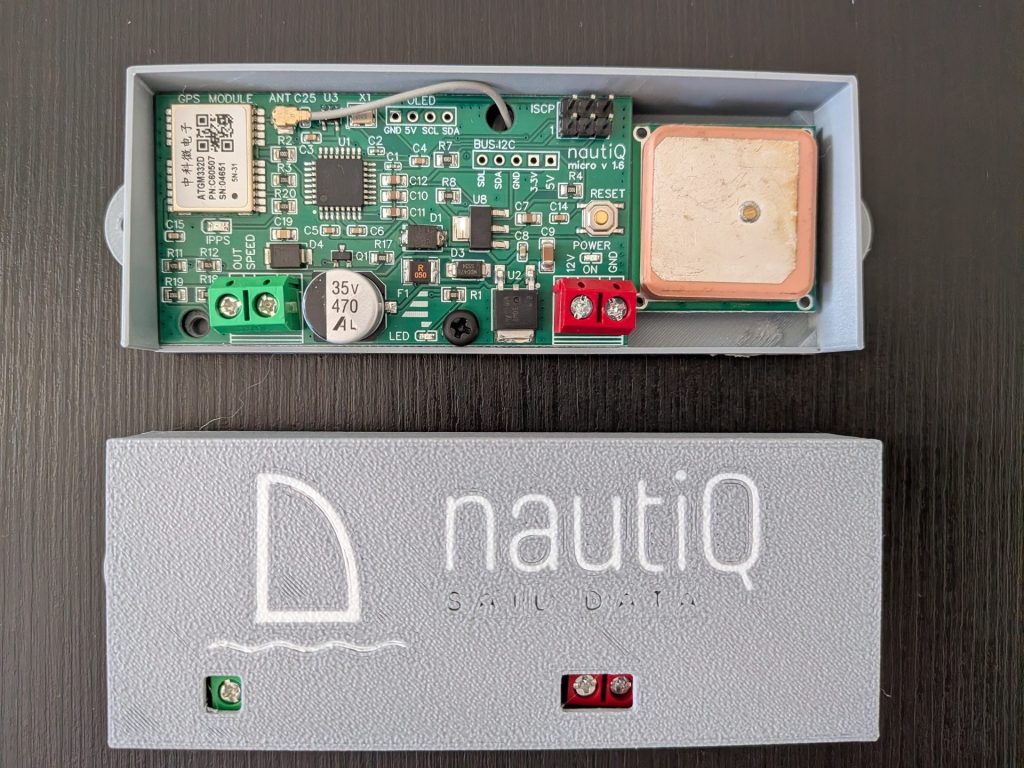
- Always available: there's no paddlewheel to foul or jam.
- Zero maintenance and no holes in the hull for the speed log.
- It tells you how fast you're really progressing towards your destination, useful for working out arrival times.
sailoQ turns that GPS speed into the same signal a speed log would send, so your existing instruments display it without changing anything.
Want to forget about your speed log? sailoQ cube-micro, available in the shop.