

Posted on

sailoQ micro 1.6: a more robust, maintenance-free GPS speed log

The sailoQ micro 1.6 is the evolution of our GPS speed log: the same simplicity as the 1.5, but even better prepared for real life on board. We keep improving!

The micro 1.5 proved we were on the right track: simple, small and doing only what it needs to do. With the 1.6 we have kept that philosophy and thoroughly reinforced everything that makes it work better on board.
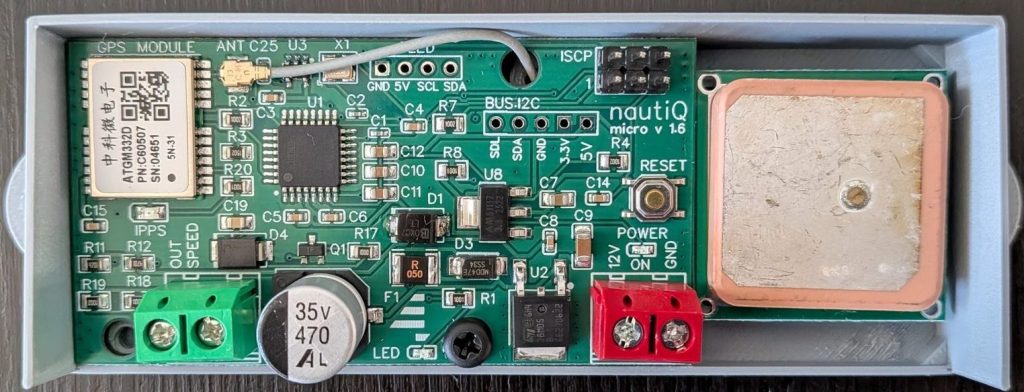
Placa sailoQ micro 1.6 con GPS integrado montada en su caja

What’s new in version 1.6:

  • Improved power supply. We have completely redesigned the 12 V input circuit. A boat’s electrical system is far from clean: spikes, voltage drops when starting the engine, noise from other equipment… The board now handles all of this much better and delivers stable power to the rest of the circuit.
  • Improved GPS antenna. Better satellite reception, faster position fix and steadier speed data, even with the board inside its enclosure and mounted on a bulkhead.
  • NMEA sentence filtering. The device discards incomplete or corrupted sentences before processing them, so only valid, useful data reaches the microprocessor. Port usage has dropped from 64 % to 16 %, four times less load.
  • Better receive buffer. We have enlarged and optimised the buffer that receives GPS data, so no information is lost even when many messages arrive in a row.
  • Expanded data bus. More capacity to communicate with other devices, and the board is ready for future expansions.

New software for the 1.6

The 1.6 shares its platform with the 1.5, so its software builds on the micro’s and has been adapted to take advantage of all these improvements. The big news is the diagnostics and controltool, which reports much more clearly what the device is doing at any time (GPS status, data reception, start-up…), so if in doubt it’s easy to see what’s happening and where.
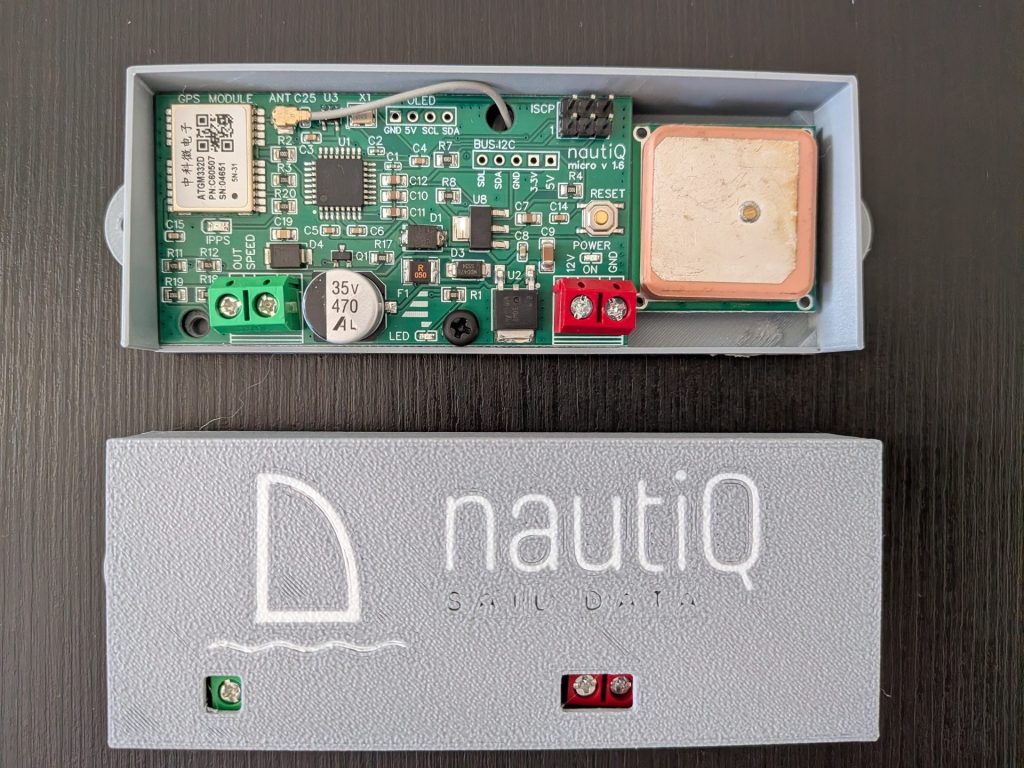
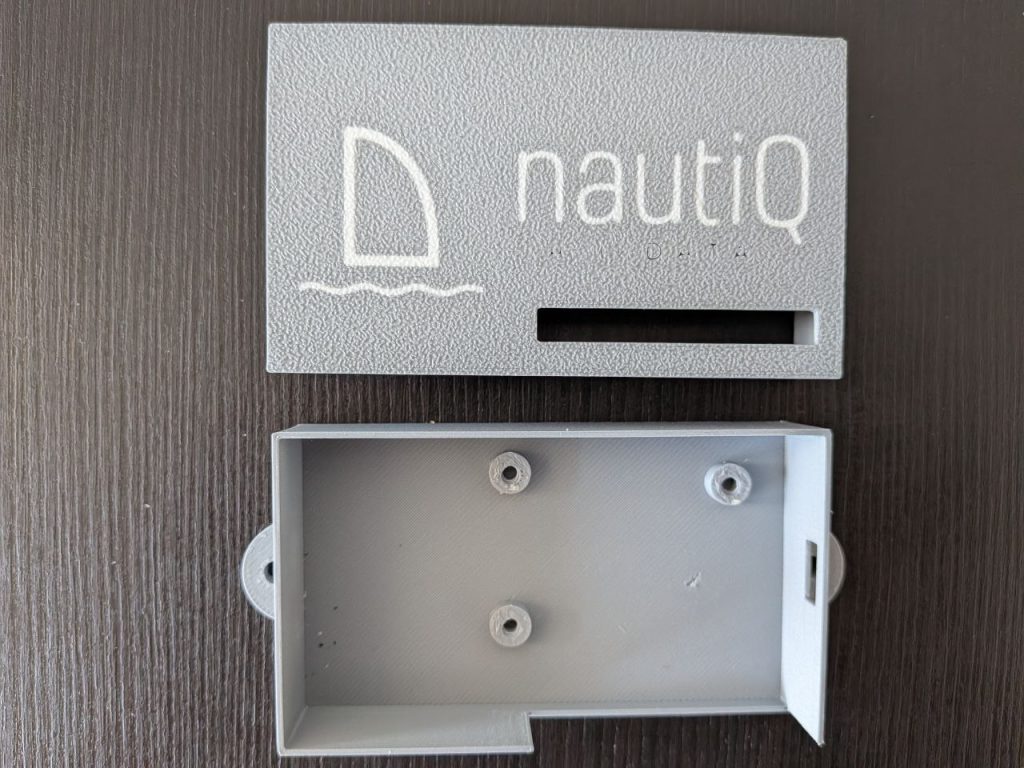
Caja sailoQ 1.6 con logo junto a la placa montada en su interior

And of course, a new custom enclosure with the sailoQ logo, for a clean and professional installation.

In the video you can see it working with a Raymarine Bidata display: at start-up it runs the calibration test, ramps the speed up and back to zero, and from then on shows GPS speed just like a good old speed log. No paddle wheel, no marine growth, no maintenance.

We hope you like it. As always, we’d love to hear any suggestions or anything you’d like to see in the device.

Now available in our shop: sailoQ cube-micro
Posted on

sailoQ micro 1.5 software: tailor-made for the speed log

The sailoQ micro gets its own software, written from scratch for it. Ultra-efficient, fast and optimised: it uses only 20 % of the available memory and 23 % of storage, and achieves unprecedented data refresh rates.

Tailor-made for the micro

The micro is designed to do one thing and do it very well: emulate a speed log. That’s why its software is not an adaptation of earlier versions but a brand-new development focused solely on that task.

The GPS is connected to the Arduino’s hardware serial port, which has its own receive buffer. Data arrives complete and on time, and the processor runs with plenty of headroom to refresh the speed faster than ever.

The result is a simple, stable and reliable device: exactly what you want from a speed log.

The new 1.6 board shares its platform with the 1.5, so its software is an evolution of this one. Read all about it in sailoQ micro 1.6.

Available in our shop: sailoQ cube-micro
Posted on

New PCB 1.4

After using the board for a while, we decided to develop a version with support for the SeaTalk bus, one of the most common (if somewhat old) data bus standards on leisure boats.

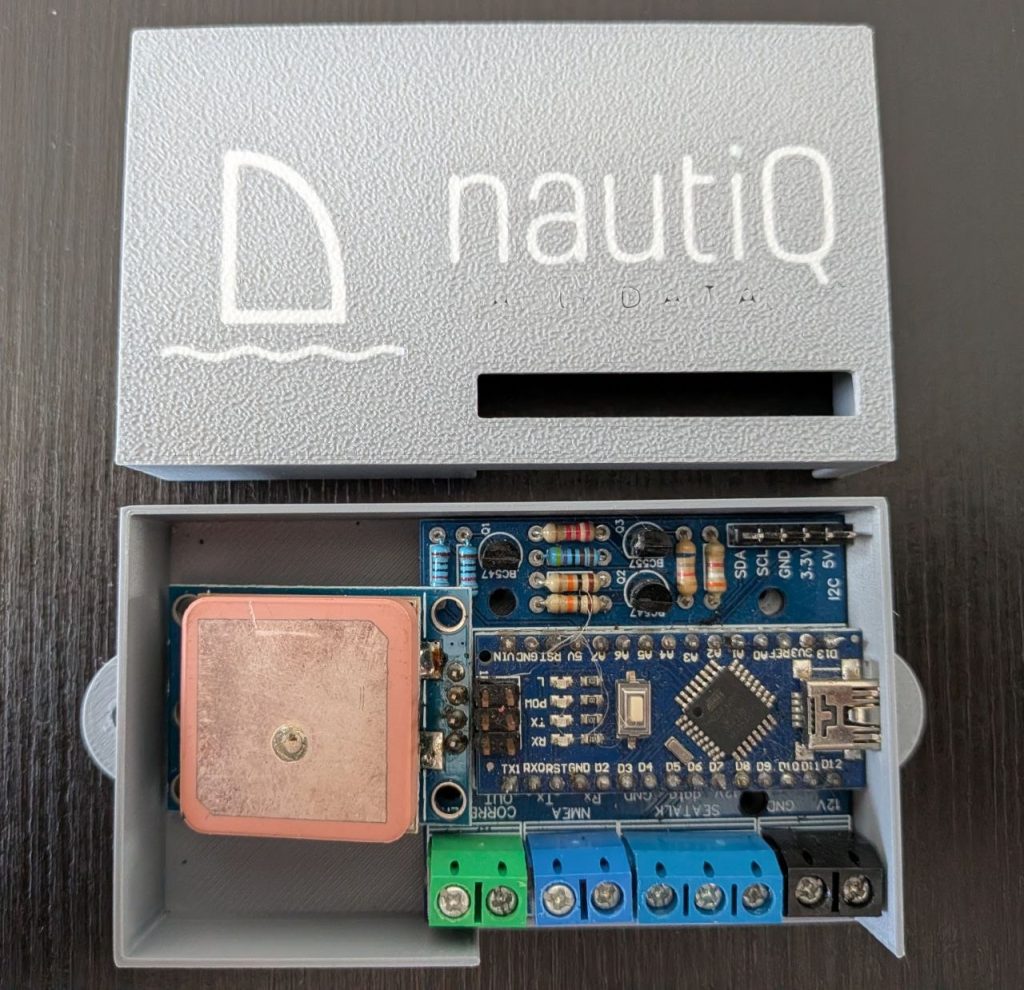
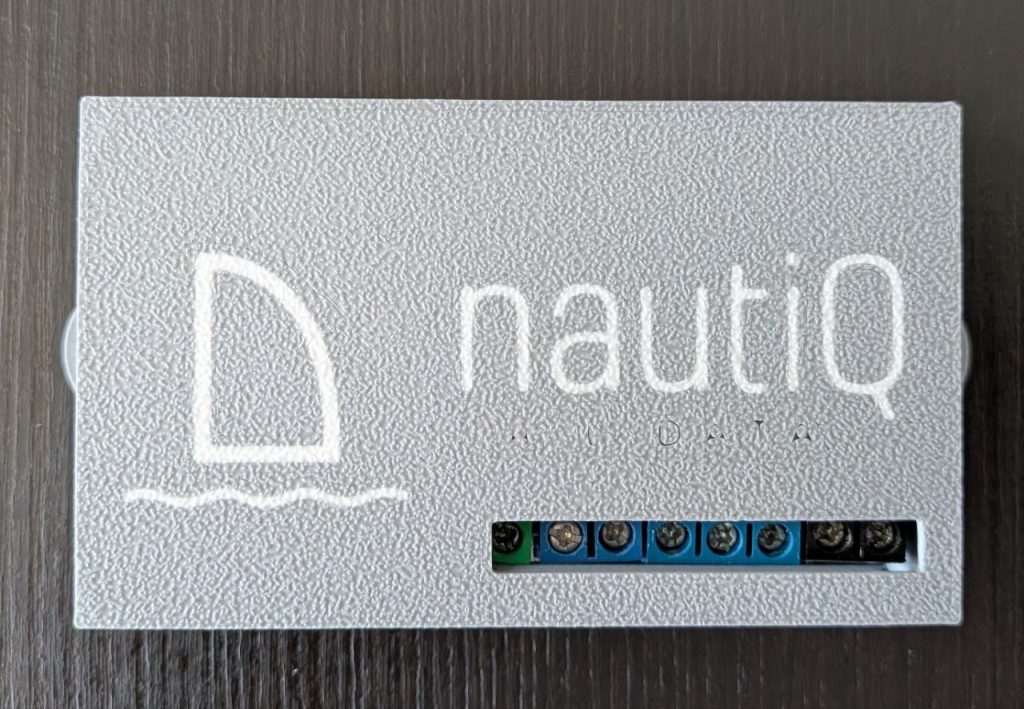
Caja sailoQ 1.4 cerrada con las bornas de conexión
Tapa y base de la caja sailoQ 1.4

We keep the NMEA0183 output and add the new SeaTalk one, so the board acts as a bridge between both, making data exchange between the two buses simple. As announced, the temperature sensor has been removed; a board can be attached via the I2C bus to read temperature, humidity and pressure (though not in a standard way).

Caja sailoQ 1.4 abierta con la placa, el Arduino y la antena GPS

Of course, we have developed new firmware to take advantage of these features and, while we were at it, optimised the code for better performance, gaining speed and error resilience.

We hope you like it.


Interested? sailoQ devices are available in the shop: the sailoQ cube-micro, speed log only, and the sailoQ cube-lite, with NMEA 0183 and SeaTalk. If you're unsure which model to choose, see Which sailoQ do I need?

Posted on

New software version 1.3

We are announcing software version 1.3. This is a major revision, with significant changes to the code structure and new features, which we describe below:

  • Support for NMEA0183 sentences to communicate using this protocol, as announced in a previous post. This is probably the most notable change, as it opens up a wide range of possibilities for the device.
  • Optional BME280 weather station (on request) providing temperature, humidity and atmospheric pressure. The data is also sent over NMEA0183 and can be read by other devices on board, or even by a Raspberry Pi running OpenCPN and automatically logged at regular intervals.
  • More information about the start-up process sent over USB, so we always know what the device is doing.
  • 20×4 LCD with a well-designed layout so it can be used on its own.

We hope these changes are well received and live up to your expectations. As always, we are listening and happy to implement anything you’d like to have in the device.


Interested? sailoQ devices are available in the shop: the sailoQ cube-micro, speed log only, and the sailoQ cube-lite, with NMEA 0183 and SeaTalk. If you're unsure which model to choose, see Which sailoQ do I need?

Posted on

NMEA-0183

The NMEA0183 data bus is still a widely used standard in leisure boating; most of the devices on our boats almost certainly communicate using this protocol, which is based (roughly speaking) on sending text messages over a simple serial port at 4800 bps with specific electrical specifications.

Although the electrical standard defines it as RS-422, it also accepts RS-232. The standard also requires isolated inputs and outputs, although in these first units we are connecting them directly, without optocouplers to isolate the output.

Well, after some trials and testing, we are now sending the speed log sentence and passing the GPS data through the NMEA output of the sailoQ-lite.

We hope you like this new feature, which adds a small extension to the device’s capabilities.

https://es.wikipedia.org/wiki/NMEA_0183

Here is a link to Wikipedia, where the NMEA0183 protocol is explained, in case you want to learn more.


Interested? sailoQ devices are available in the shop: the sailoQ cube-micro, speed log only, and the sailoQ cube-lite, with NMEA 0183 and SeaTalk. If you're unsure which model to choose, see Which sailoQ do I need?

Posted on

New software version 1.2

Initially we focused on emulating a speed log that could be connected to a Tridata display and send speed log pulses, but now the software has been redesigned to add new features, which we describe below:

  • every time the device starts up, it runs a calibration test: it shows a speed of 3.5 knots (ramping up progressively to 3.5 knots, holding for a few seconds and returning to zero, ready to work), so we can compare it with the speed shown on the Tridata display and, if necessary, adjust the display’s calibration values (check your display’s manual for this).
  • it does not show values below 0.5 knots, as false readings could sometimes occur while at anchor.
  • The data refresh rate has been reduced so values don’t follow each other too quickly, avoiding that “jumpy” feeling.
  • it shows start-up information over the USB port, as well as GPS information and COG and SOG values.

We hope you find all these changes interesting, and please send us any others you think are necessary or would like to have.


Interested? sailoQ devices are available in the shop: the sailoQ cube-micro, speed log only, and the sailoQ cube-lite, with NMEA 0183 and SeaTalk. If you're unsure which model to choose, see Which sailoQ do I need?