
It is one of the most common questions among sailors, and also one of the most often explained the wrong way round: which speed includes the current, the log's or the GPS's? We explain it with examples so it never trips you up again, and show how to use the difference to tell whether the current is with you or against you.
What each one measures
- The paddlewheel speed log measures speed through the water (STW, speed through water). It is how fast the boat moves on its own, under sail or engine, through the water.
- GPS measures speed over the ground (SOG, speed over ground). It is how fast you are really moving relative to dry land.
The key is that the current moves the water and the boat together. The log's paddlewheel travels with the water, so it does not notice it. GPS, on the other hand, measures relative to the seabed, so it does include it.
The rule to remember: GPS = log + current.
How to tell whether the current is with you or against you
Just compare the two readings:
| What you see | What it means |
| GPS reads more than the log | Current with you |
| GPS reads less than the log | Current against you |
| They read the same | No current (or a beam current) |
Two examples: with the log at 6 knots and the GPS at 8, you have 2 knots of current with you. With the log at 8 and the GPS at 6, it is against you.
The typical mistake: thinking the log includes the current
It is easy to get confused, because it seems that “the water” is what carries the current. Think of the moving walkways at airports: if you walk on the walkway at 4 km/h and the walkway moves at 3 km/h, your legs only feel your 4 km/h (that is the log), but relative to the airport floor you move at 7 km/h (that is the GPS). The current is the walkway.
And if the current comes from the side?
In fact, speed and current add up as vectors. If the current hits you from the side, it is not fully added or subtracted: it barely changes your speed, but it pushes you off course. That is why, as well as speed, it is worth comparing your heading with the course over ground (COG) given by the GPS.
What about the wind?
Wind instruments use boat speed to calculate true wind. With the log you get true wind relative to the water; with GPS speed, wind relative to the ground. In areas with little current, such as most of the Mediterranean, the difference is small and the data is still very useful, for example to decide when to reef on a downwind leg.
And with sailoQ?
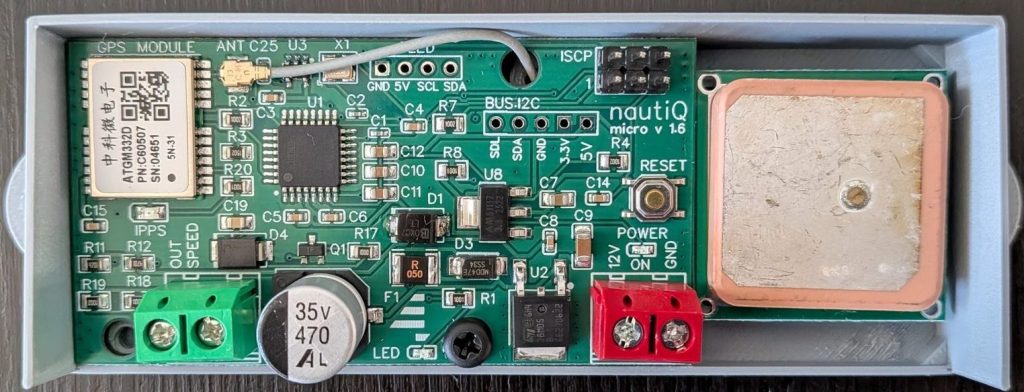
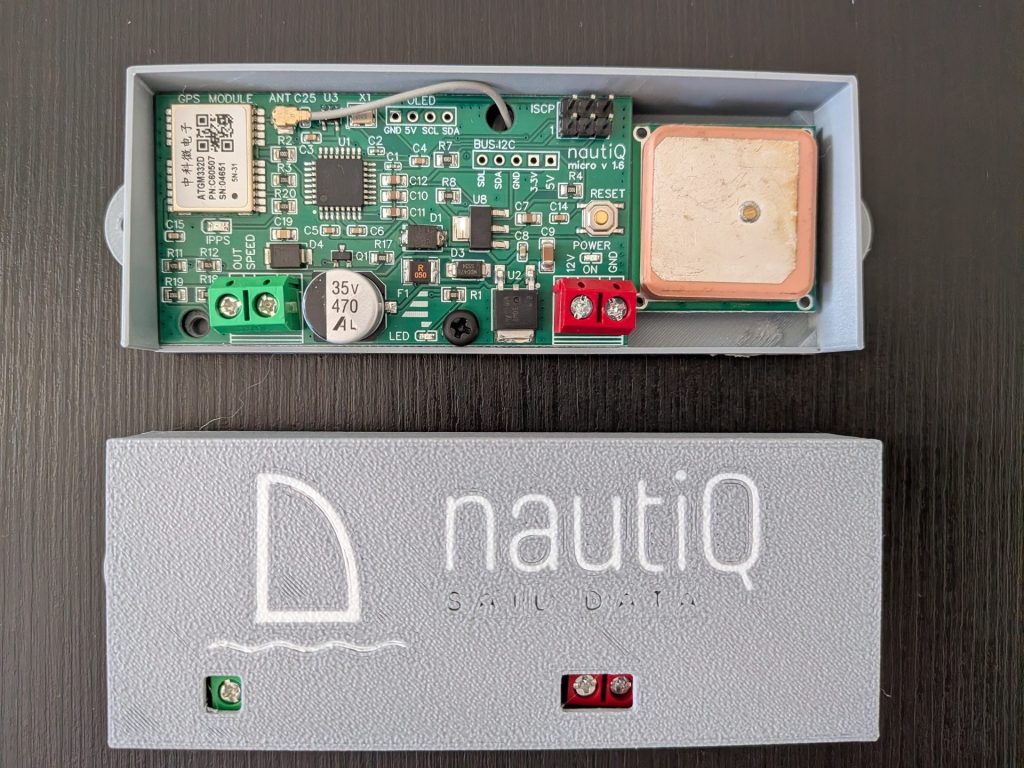
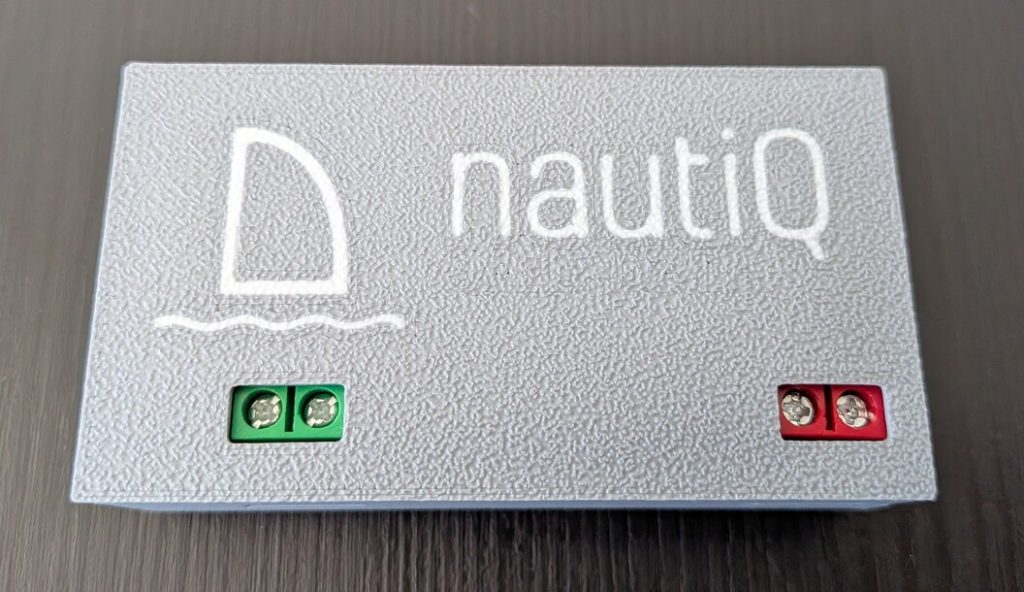
sailoQ sends the GPS speed to your display as if it were the speed log. That means you will always see speed over ground and you will not be able to work out the current by comparing the two readings: that is the trade-off, and we prefer to say so clearly. In return you forget about the paddlewheel, the through-hull and the maintenance, and you always have the speed that really gets you to your destination, with the log and wind data still working.
If you want to go deeper, we explain it in GPS speed log or paddlewheel log: what each one measures and in Why does the speed log fail?