

Posted on

sailoQ remote: your autopilot and boat data in your hand

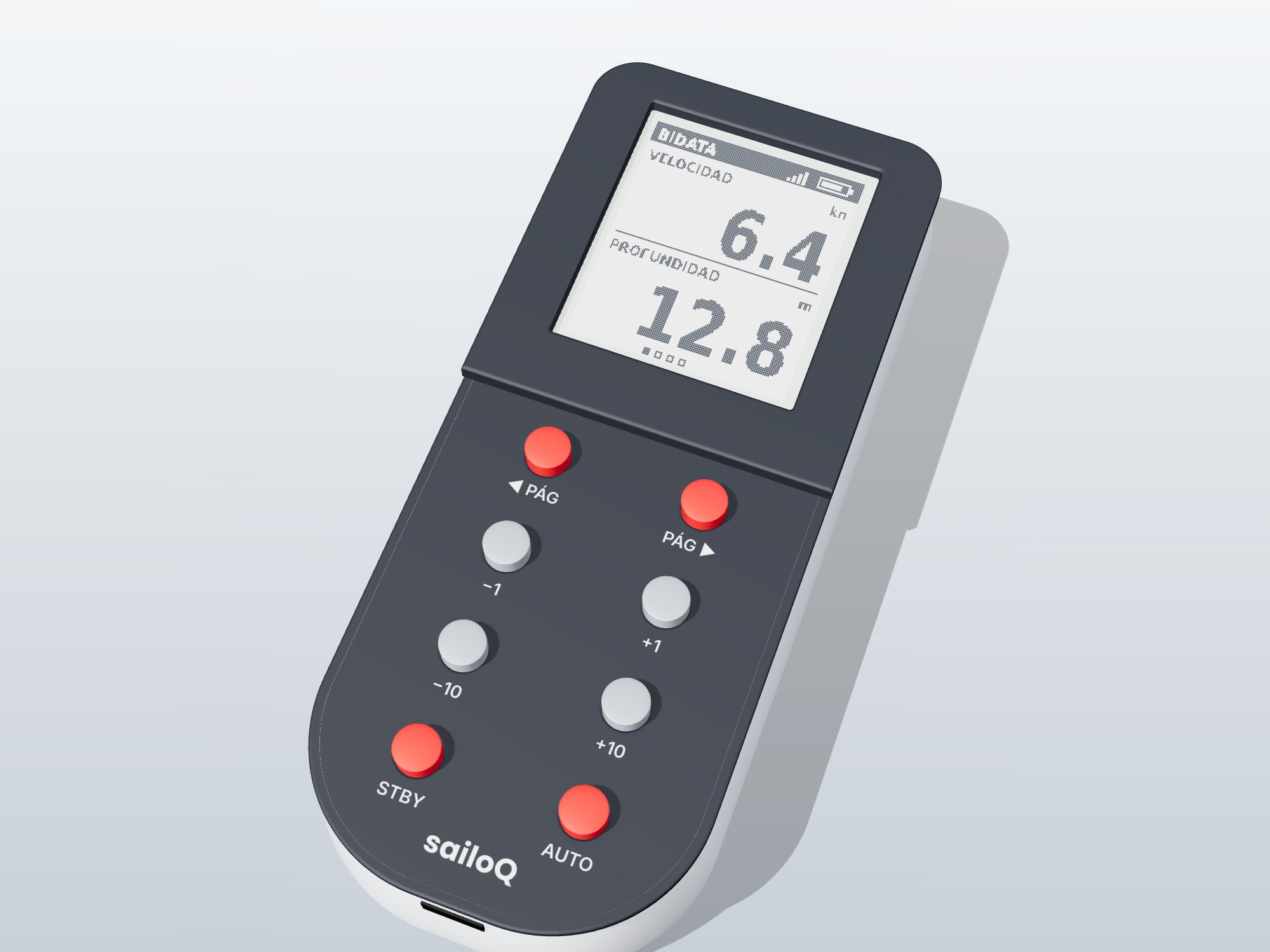
Render del sailoQ remote visto de frente, con la pantalla de velocidad y profundidad

Meet the sailoQ remote, the next member of the family: a handheld remote with a display that lets you command your autopilot and see your boat's data from anywhere on deck.

It is in production right now and we expect it to be available in about 30 days. The images in this post are renders of the design.
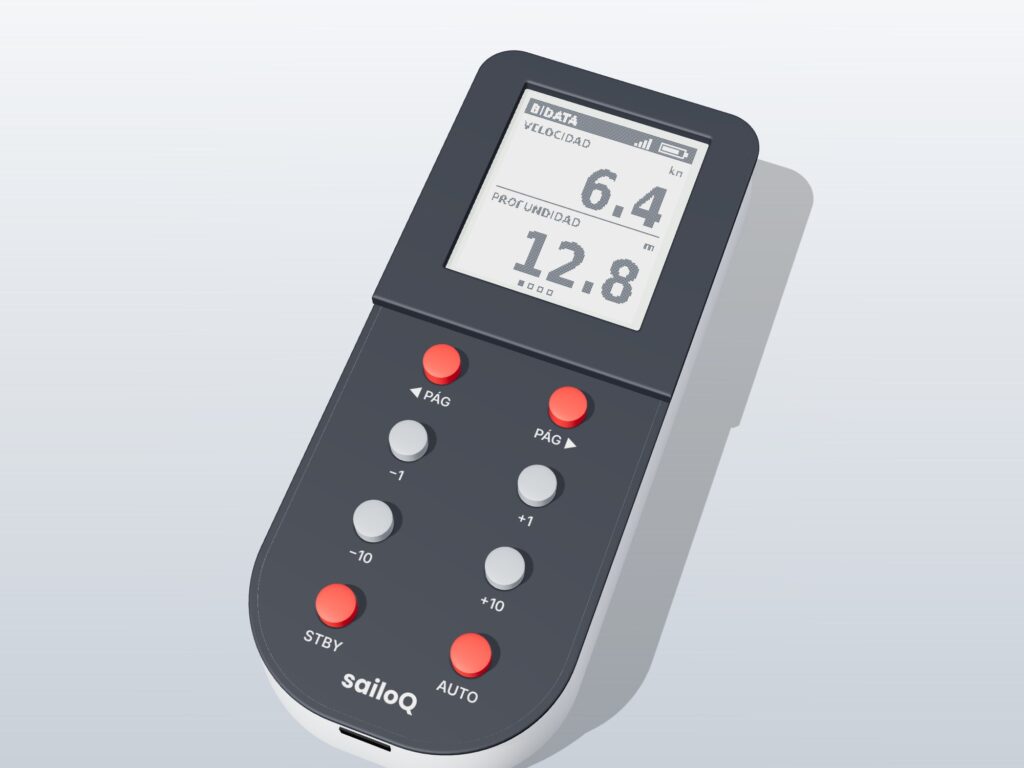
Render del sailoQ remote visto de frente, con la pantalla de velocidad y profundidad
Render of the sailoQ remote.

The size of a VHF handset

It measures 60 × 140 × 30 mm, roughly the same as the handheld microphone of a VHF radio. It fits in one hand and you can take it with you to the helm, the bow or the cockpit.

A display you can read in full sun

It has a 46 × 57 mm monochrome graphic display, large for its size and designed to be read in sunlight, which is exactly where you'll use it. Numbers are big and clear, with no glare or colours to distract you.

Eight buttons you can use with gloves

It has 8 buttons, large and well spaced so you can use them with sailing gloves:

  • 2 page buttons to move from one screen to the next.
  • 6 context buttons, whose function changes with the page you're on. On the autopilot page, for example, they are Auto, Standby and 1° and 10° course changes to either side.
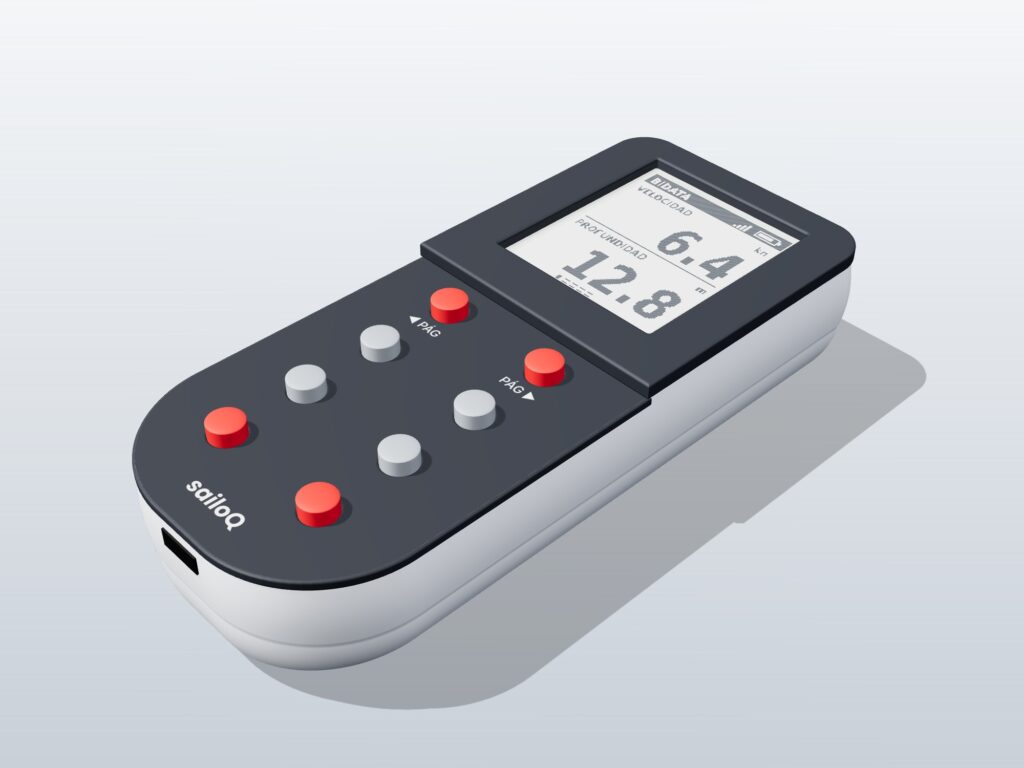
Render lateral del sailoQ remote

What you can do with it

The sailoQ remote takes the information from your boat's data buses and shows it across several pages:

  • Autopilot: switch it to Auto or Standby, see the locked heading and adjust it.
  • Navigation data: speed and depth, like a handheld tridata repeater.
  • Wind: apparent wind angle and speed.
  • Windlass: raise or lower the anchor and see how much chain is out.
  • Bow thruster: push the bow to port or starboard.
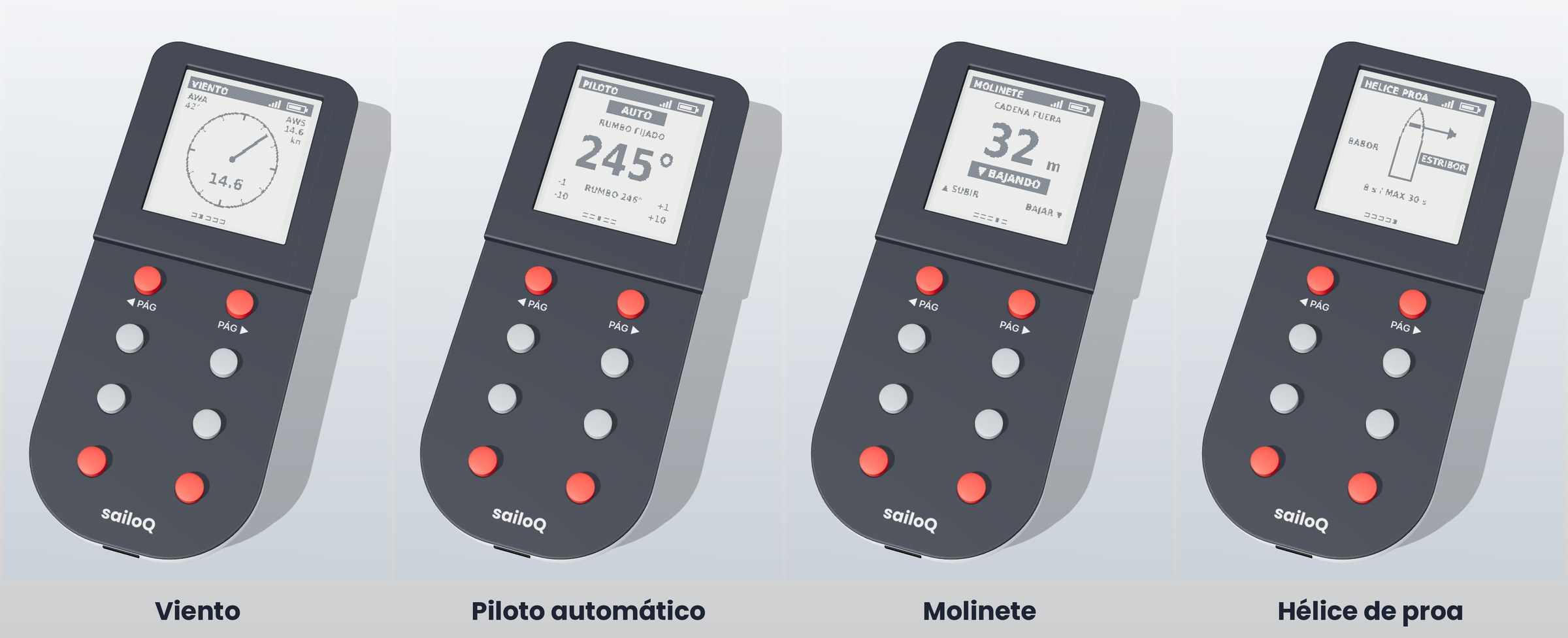
Cuatro pantallas del sailoQ remote: viento, piloto automático, molinete y hélice de proa
Some of its pages: wind, autopilot, windlass and bow thruster.

It reads the data through other sailoQ devices installed on board, such as the sailoQ cube-lite or the upcoming sailoQ pro.

Inside

This is the board without its case: the display at the top and the eight buttons below.
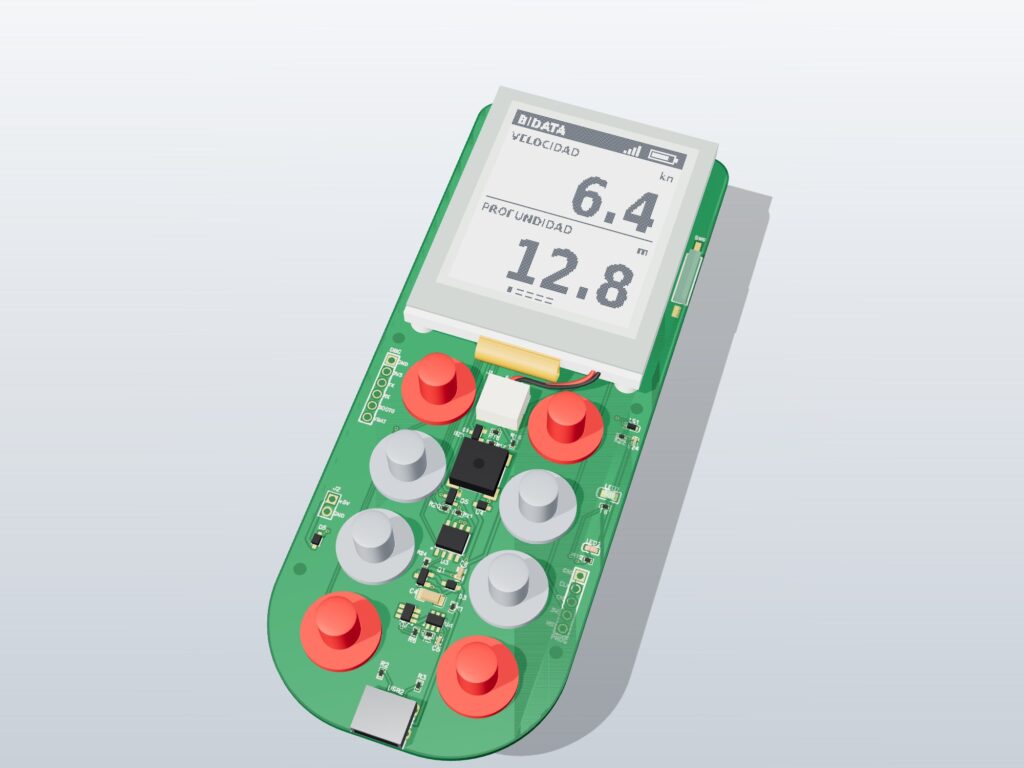
Render de la placa del sailoQ remote sin carcasa
The sailoQ remote pages in motion.

Interested? Write to us through the contact page and we'll let you know as soon as it's available. Meanwhile, if you want to control your autopilot with a remote, the sailoQ cube-lite already does it with a 433 MHz remote.
Posted on

New sailoQ cube-lite 1.6: STM32, NMEA 0183–SeaTalk bridge and autopilot remote

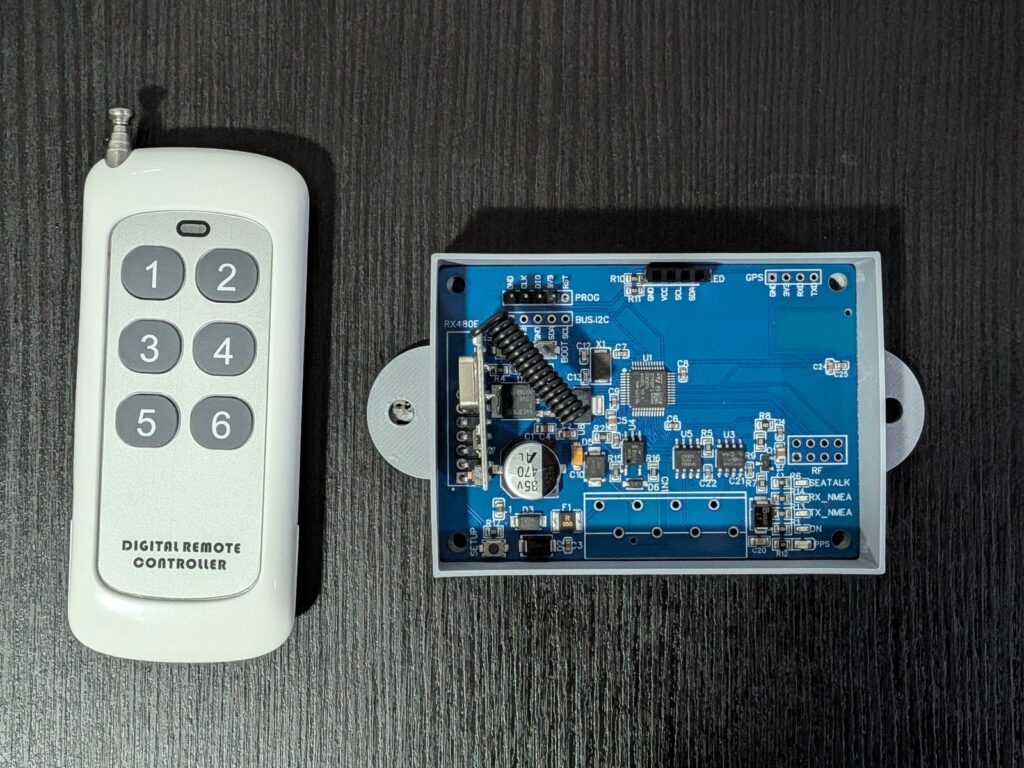
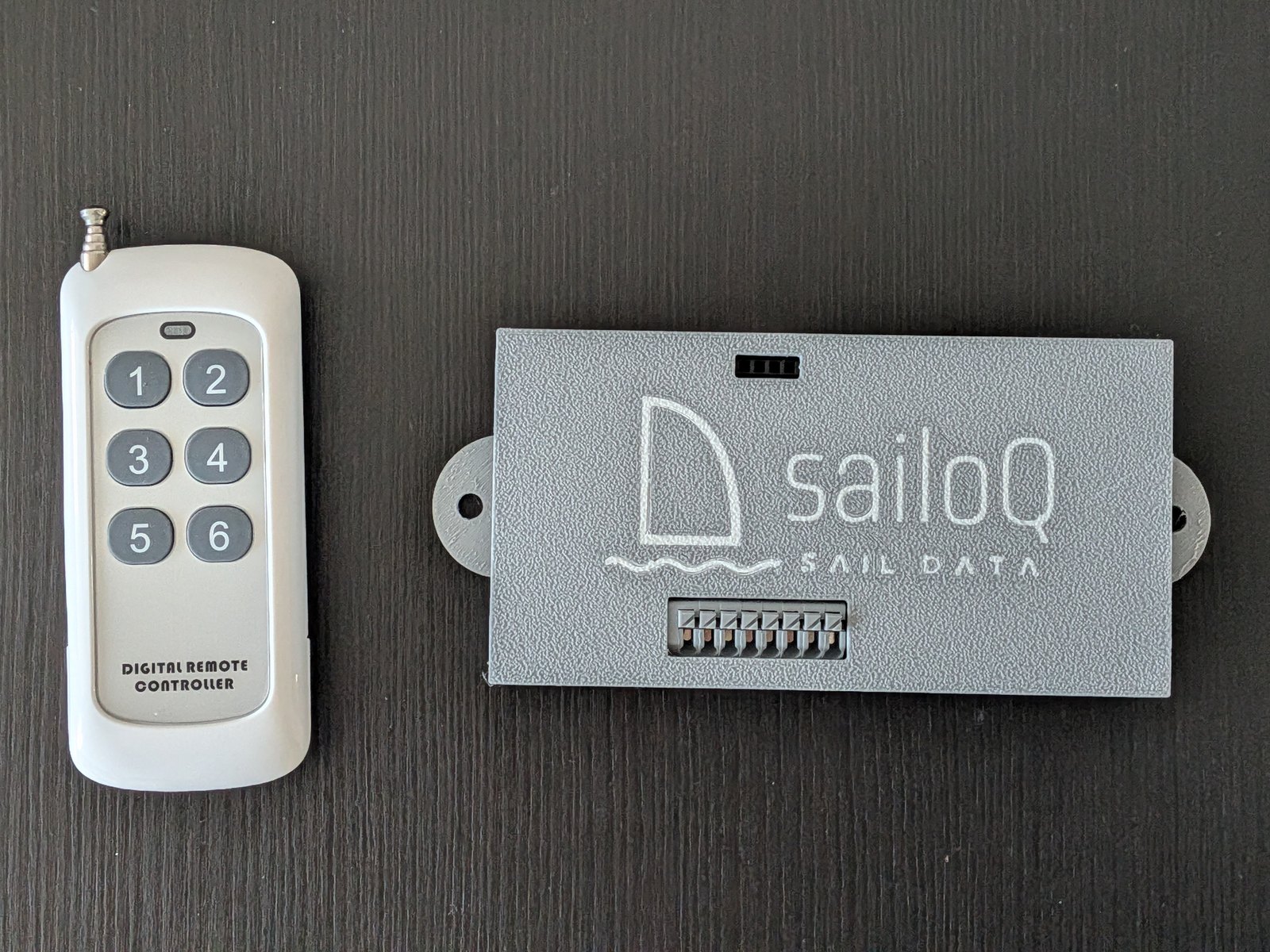
Caja sailoQ cube-lite junto al mando a distancia para el piloto automático

We've just received the new boards for the sailoQ cube-lite 1.6, and they bring the biggest change since we started: a new processor, more features and a remote control for the autopilot.

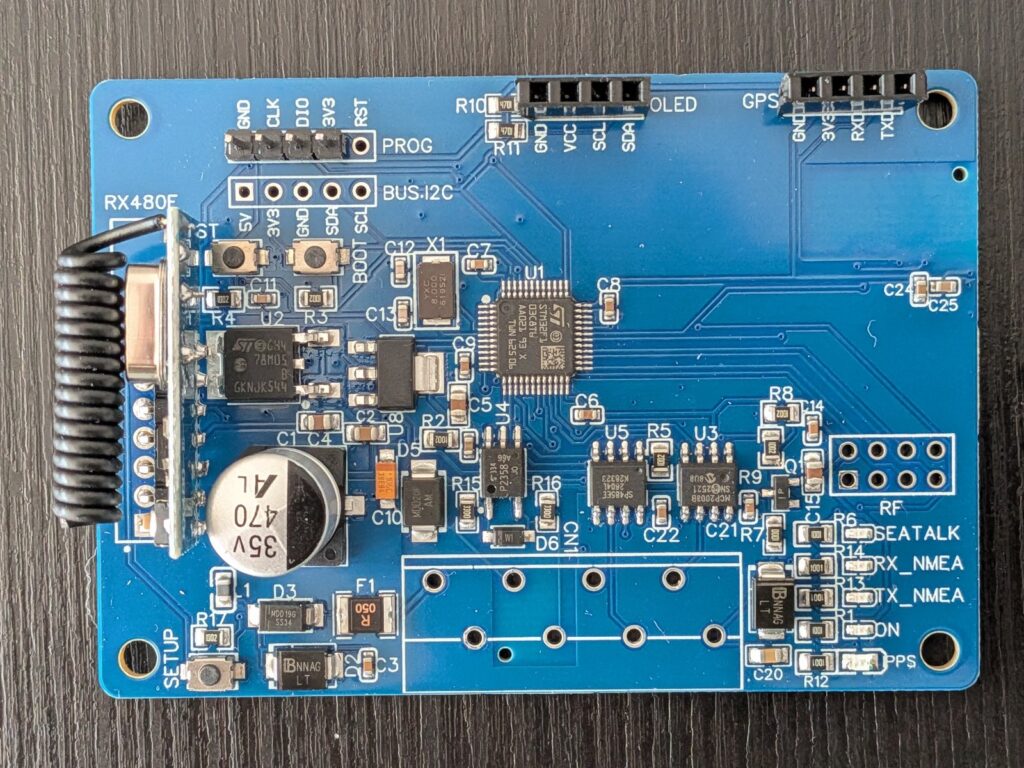
Placa de la sailoQ cube-lite 1.6 con procesador STM32 y receptor de 433 MHz
The new 1.6 board, with the STM32 processor and the 433 MHz receiver (top left).

STM32 processor: much more power

The new cube-lite is fitted with an STM32, a microcontroller family far more powerful than the Arduino Nano in the previous version. With it, the cube-lite easily handles both of the boat's data buses, NMEA 0183 and SeaTalk, at the same time and without losing messages.

The NMEA 0183 inputs are optically isolated, as the standard requires: the cube-lite is electrically isolated from the equipment that sends it data.

NMEA 0183 to SeaTalk bridge

We've increased the number of sentences the cube-lite relays between the two buses, so NMEA 0183 equipment and Raymarine SeaTalk instruments share information without any extra gateways.

Speed log from the GPS you already have

The cube-lite keeps the speed log output to your display. It doesn't need its own GPS: it uses the GPS already installed on your boat, whether it arrives over NMEA 0183 or SeaTalk. Your display shows speed again with no paddlewheel to clean and no barnacles, using the equipment you already have on board.

If your boat has no GPS connected to the instrument network, there is also a version with built-in GPS. When fitted, the cube-lite uses it as the main source of position and speed. Only a few units of this version are available.

Remote control for the autopilot

The big new feature is the 433 MHz radio receiver. With a remote control you can operate the autopilot connected to the SeaTalk network from anywhere on the boat: from the bow when anchoring, from the cockpit or while trimming the sails.

From the remote you can:

  • Switch the autopilot to Auto or Standby.
  • Change course by 1° or 10° to port or starboard.
  • Put the autopilot in wind mode, using a key combination.

All the key combinations will be explained in the manual.

It also works with any 433 MHz remote control, which you can pair with the cube-lite yourself.

Mando a distancia de 433 MHz junto a la sailoQ cube-lite 1.6 abierta
The remote control and the cube-lite 1.6.

Interested? See the sailoQ cube-lite in the shop or, if you only need the speed log, the sailoQ cube-micro. If you're not sure which model to choose, see Which sailoQ do I need?

Posted on

sailoQ ITF3: your wind, speed log and depth sensors on SeaTalk, NMEA 2000 and NMEA 0183

Introducing sailoQ's new project: the sailoQ ITF3, an instrument interface that connects your boat's classic sensors to today's data networks.

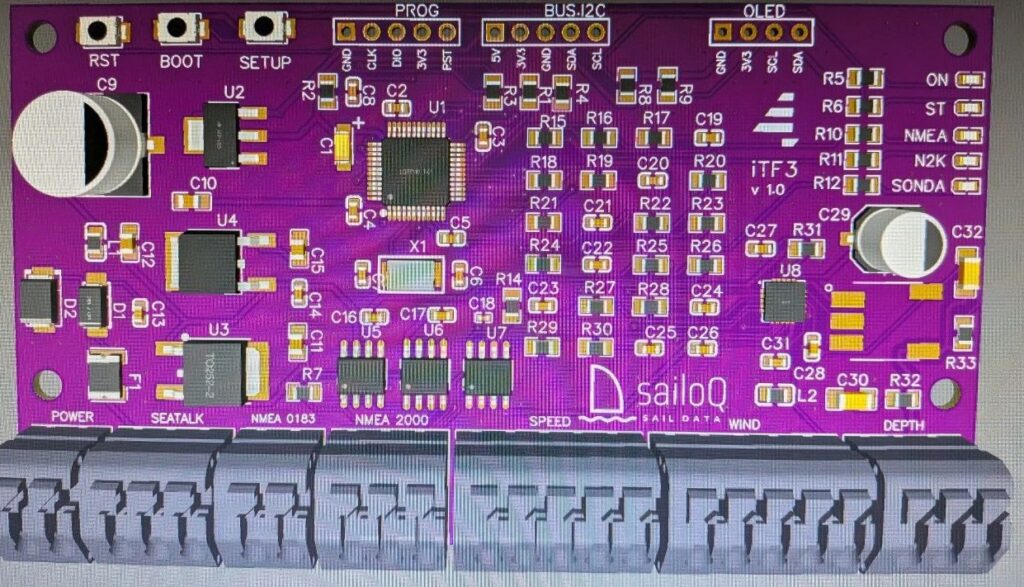
Diseño de la placa sailoQ ITF3, interfaz de viento, corredera y sonda
ITF3 board design, before manufacturing.

What it is

Many boats have sensors in perfect condition: the wind vane at the masthead, the speed log and the depth transducer in the hull. What breaks down or becomes outdated is what sits behind them. The ITF3 reads those sensors directly and sends their data to the equipment on board, so you can keep using them with a modern chartplotter or with the instruments you already have.

Which sensors it reads

  • Wind: the wind vane and anemometer of the Raymarine ST60 and i60.
  • Speed log: speed through the water and water temperature.
  • Depth: depth, with 200 kHz transducers such as Airmar.

Where it sends the data

The ITF3 sends the information simultaneously over SeaTalk, NMEA 2000 and NMEA 0183. This means it can feed Raymarine instruments over SeaTalk, chartplotters and multifunction displays over NMEA 2000, and NMEA 0183 equipment such as autopilots, VHF radios or computers running OpenCPN.

It also has a connection for a small display to see the data at a glance during installation.

Designed for the sea

A single board replaces several interfaces, with one terminal block per connection and its name next to it, so installation is simple and tidy. The board will be conformal-coated to protect it from moisture and salt.

Where we are

We have already sent the first prototypes for manufacturing. When they arrive, we will test them on the bench and on the water, and we will keep you posted here.


Interested? If you'd like us to let you know when it's available, or you're not sure whether it suits your boat, write to us from the contact page. In the meantime, take a look at the other sailoQ devices.

Posted on

sailoQ micro 1.6: a more robust, maintenance-free GPS speed log

The sailoQ micro 1.6 is the evolution of our GPS speed log: the same simplicity as the 1.5, but even better prepared for real life on board. We keep improving!

The micro 1.5 proved we were on the right track: simple, small and doing only what it needs to do. With the 1.6 we have kept that philosophy and thoroughly reinforced everything that makes it work better on board.

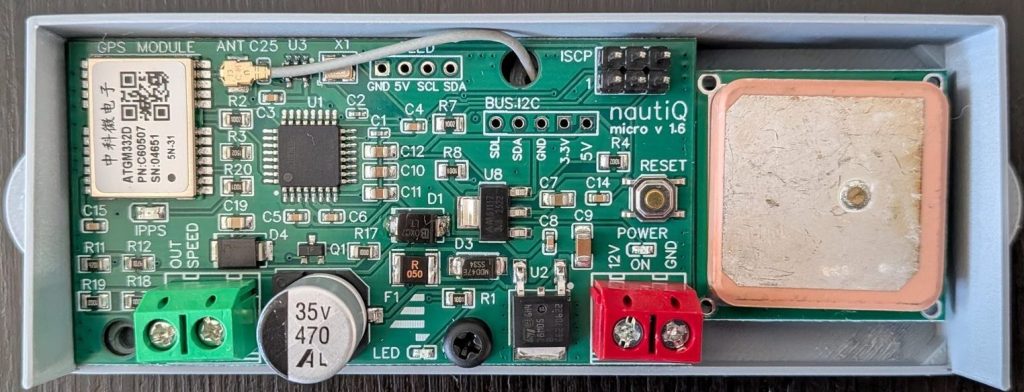
Placa sailoQ micro 1.6 con GPS integrado montada en su caja

What’s new in version 1.6:

  • Improved power supply. We have completely redesigned the 12 V input circuit. A boat’s electrical system is far from clean: spikes, voltage drops when starting the engine, noise from other equipment… The board now handles all of this much better and delivers stable power to the rest of the circuit.
  • Improved GPS antenna. Better satellite reception, faster position fix and steadier speed data, even with the board inside its enclosure and mounted on a bulkhead.
  • NMEA sentence filtering. The device discards incomplete or corrupted sentences before processing them, so only valid, useful data reaches the microprocessor. Port usage has dropped from 64 % to 16 %, four times less load.
  • Better receive buffer. Hemos ampliado y optimizado el buffer que recibe los datos del GPS, no se pierde información aunque lleguen muchos mensajes seguidos.
  • Expanded data bus. More capacity to communicate with other devices, and the board is ready for future expansions.

New software for the 1.6

The 1.6 shares its platform with the 1.5, so its software builds on the micro’s and has been adapted to take advantage of all these improvements. The big news is the diagnostics and controltool, which reports much more clearly what the device is doing at any time (GPS status, data reception, start-up…), so if in doubt it’s easy to see what’s happening and where.

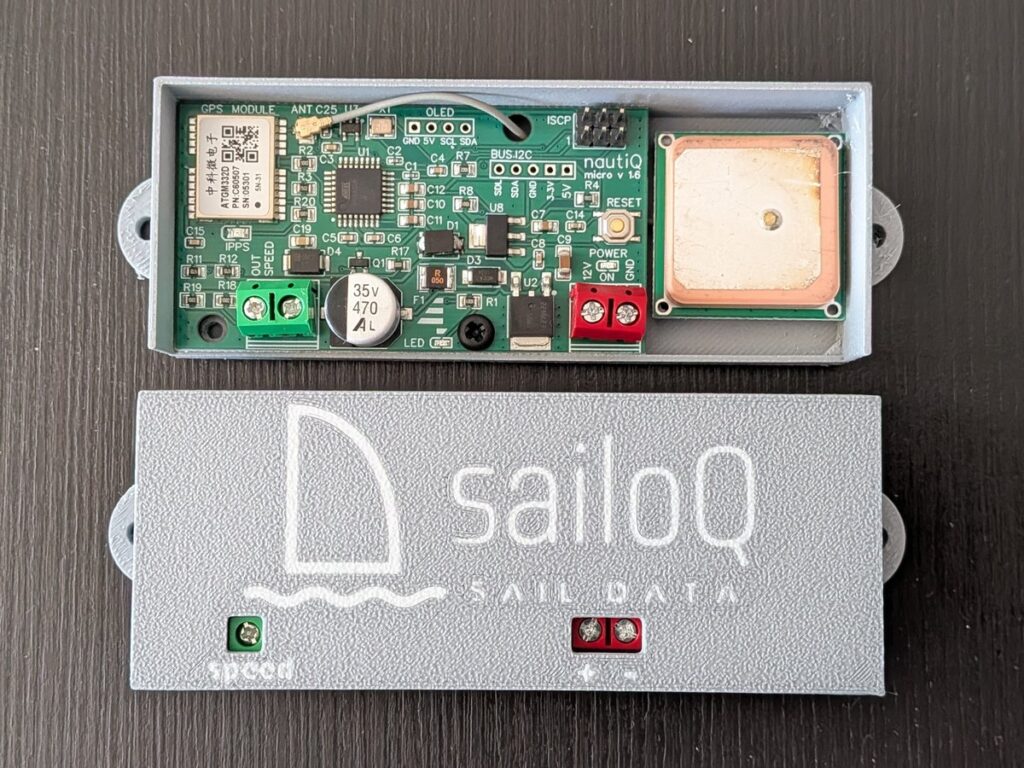
Caja sailoQ 1.6 con logo junto a la placa montada en su interior

And of course, a new custom enclosure with the sailoQ logo, for a clean and professional installation.

We hope you like it. As always, we’d love to hear any suggestions or anything you’d like to see in the device.

Installation manual (PDF): Español · English

Now available in our shop: sailoQ cube-micro

Posted on

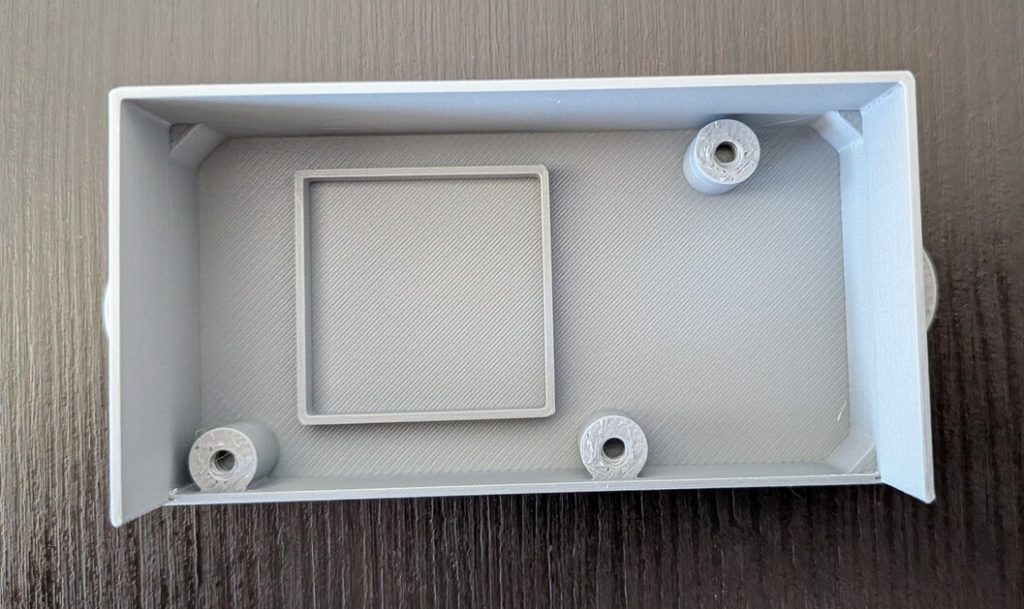
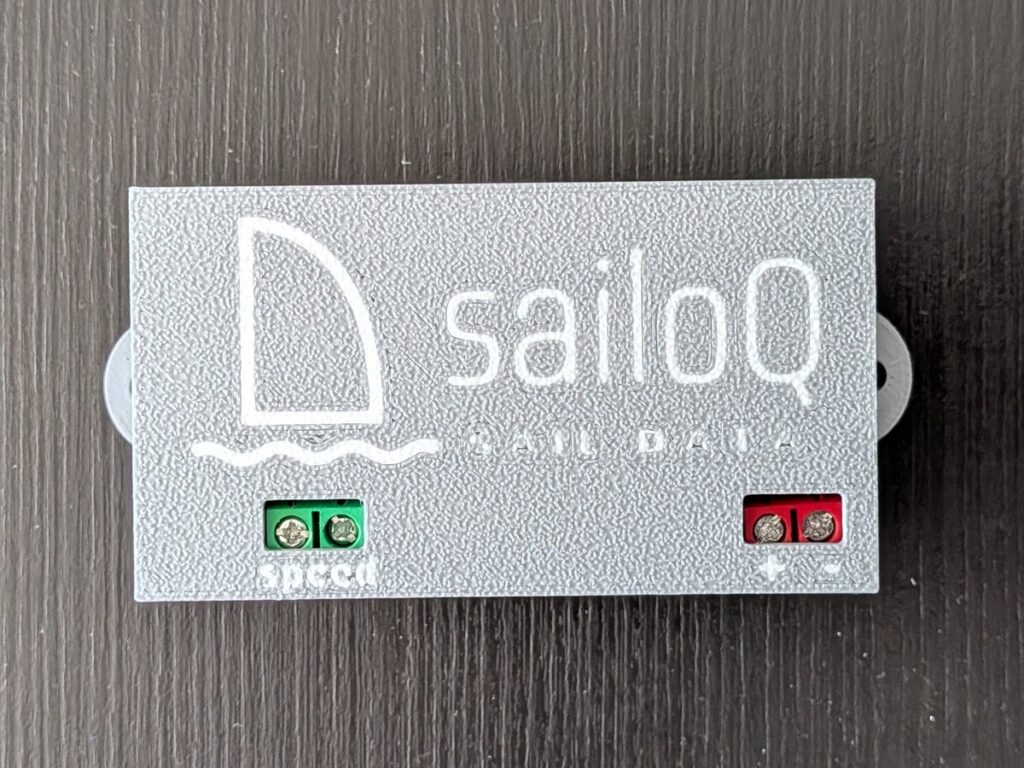
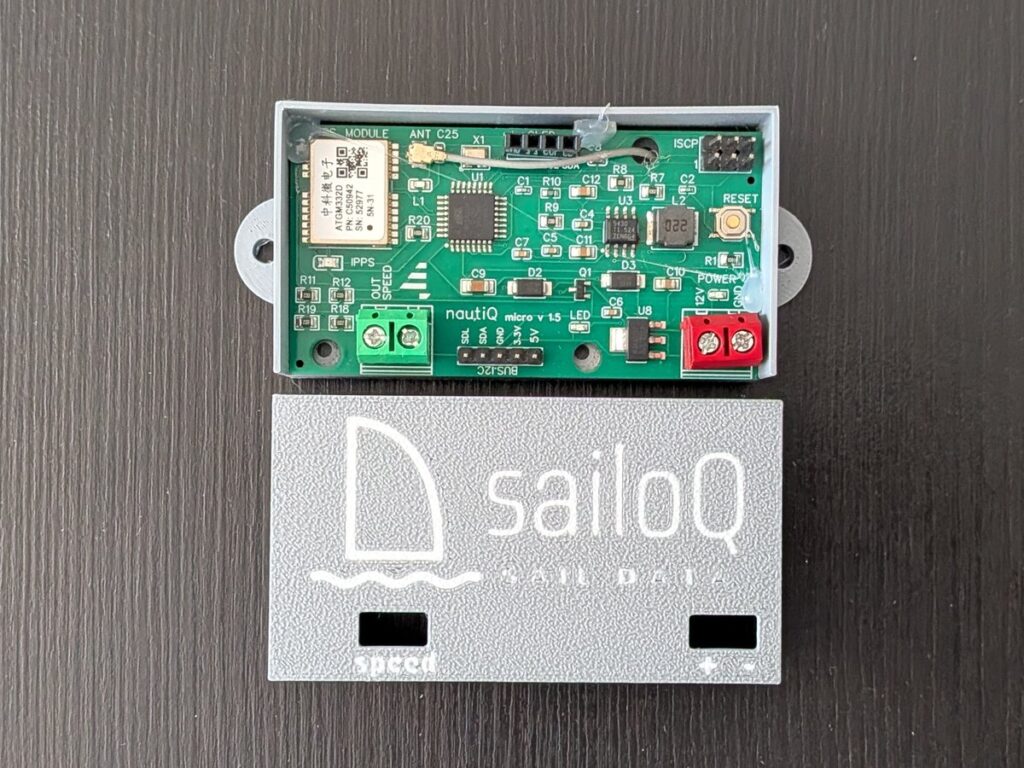
New enclosure for the sailoQ micro: screwless, with a custom-fit lid

For the micro enclosures we have a new 3D printer, and it shows: much higher print quality and, above all, much greater precision.

That precision has allowed us to tighten tolerances dramatically, so we’ve done away with screws: the lid fits perfectly and stays firmly closed on its own. Fewer parts, faster assembly and a much cleaner finish.

Caja sailoQ micro 1.5 abierta con la placa montada

What do you think?

Now available in our shop: sailoQ cube-micro

Posted on

sailoQ micro 1.5: the simplest GPS speed log

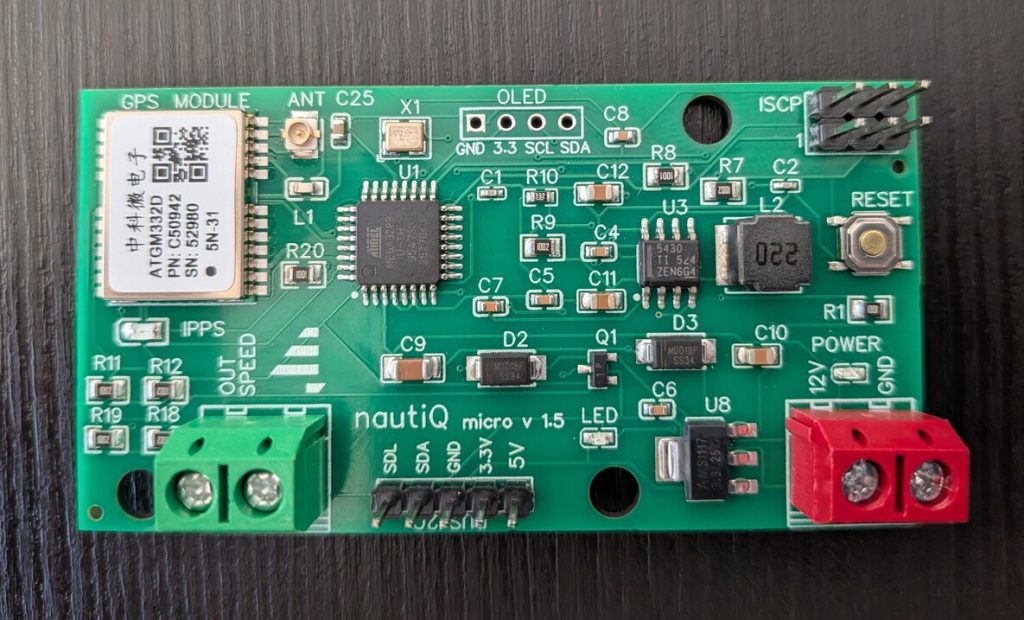
The sailoQ micro is our simplest board: it replaces your boat’s speed log with GPS speed. No paddle wheel, no marine growth, no maintenance. And with version 1.5 we’ve done it again! We redesigned it from scratch to do just that, better than ever.

Placa sailoQ micro 1.5 con GPS integrado

What’s new in version 1.5:

  • GPS built into the board. Everything in a single unit: fewer cables, fewer connections and more reliable communication.
  • GPS on the hardware serial port, with receive buffer. Data arrives complete and on time, so the speed on your display is steady.
  • All-new design. No unnecessary circuitry: fewer components and fewer things that can go wrong.
  • Improved power supply. A buck converter delivers clean, stable 5 V without overheating.
  • Smaller than ever. Our trademark size reduction: it fits in any corner next to your instruments.

Is it for me? If you need to replace your speed log and already have data sharing between your boat’s networks sorted, the micro is for you: simple and affordable.

Available in our shop: sailoQ cube-micro

Posted on

New PCB 1.4

After using the board for a while, we decided to develop a version with support for the SeaTalk bus, one of the most common (if somewhat old) data bus standards on leisure boats.

Caja sailoQ 1.4 cerrada con las bornas de conexión

We keep the NMEA0183 output and add the new SeaTalk one, so the board acts as a bridge between both, making data exchange between the two buses simple. As announced, the temperature sensor has been removed; a board can be attached via the I2C bus to read temperature, humidity and pressure (though not in a standard way).

Caja sailoQ 1.4 abierta con la placa, el Arduino y la antena GPS

Of course, we have developed new firmware to take advantage of these features and, while we were at it, optimised the code for better performance, gaining speed and error resilience.

We hope you like it.


Interested? sailoQ devices are available in the shop: the sailoQ cube-micro, speed log only, and the sailoQ cube-lite, with NMEA 0183 and SeaTalk. If you're unsure which model to choose, see Which sailoQ do I need?

Posted on

sailoQ 1.3 board schematic: build your own

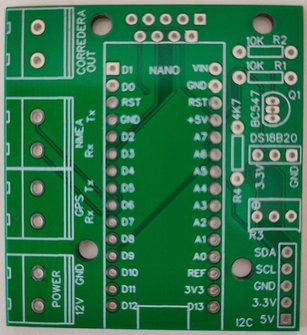
Placa de circuito impreso sailoQ 1.3 sin componentes

It all started with an idea Jiauka shared on the forum La Taberna del Puerto: using a GPS to make the speed log display show speed again. Following his instructions we built our first boards and, since we love tinkering, we kept improving the idea until we arrived at this 1.3 board.

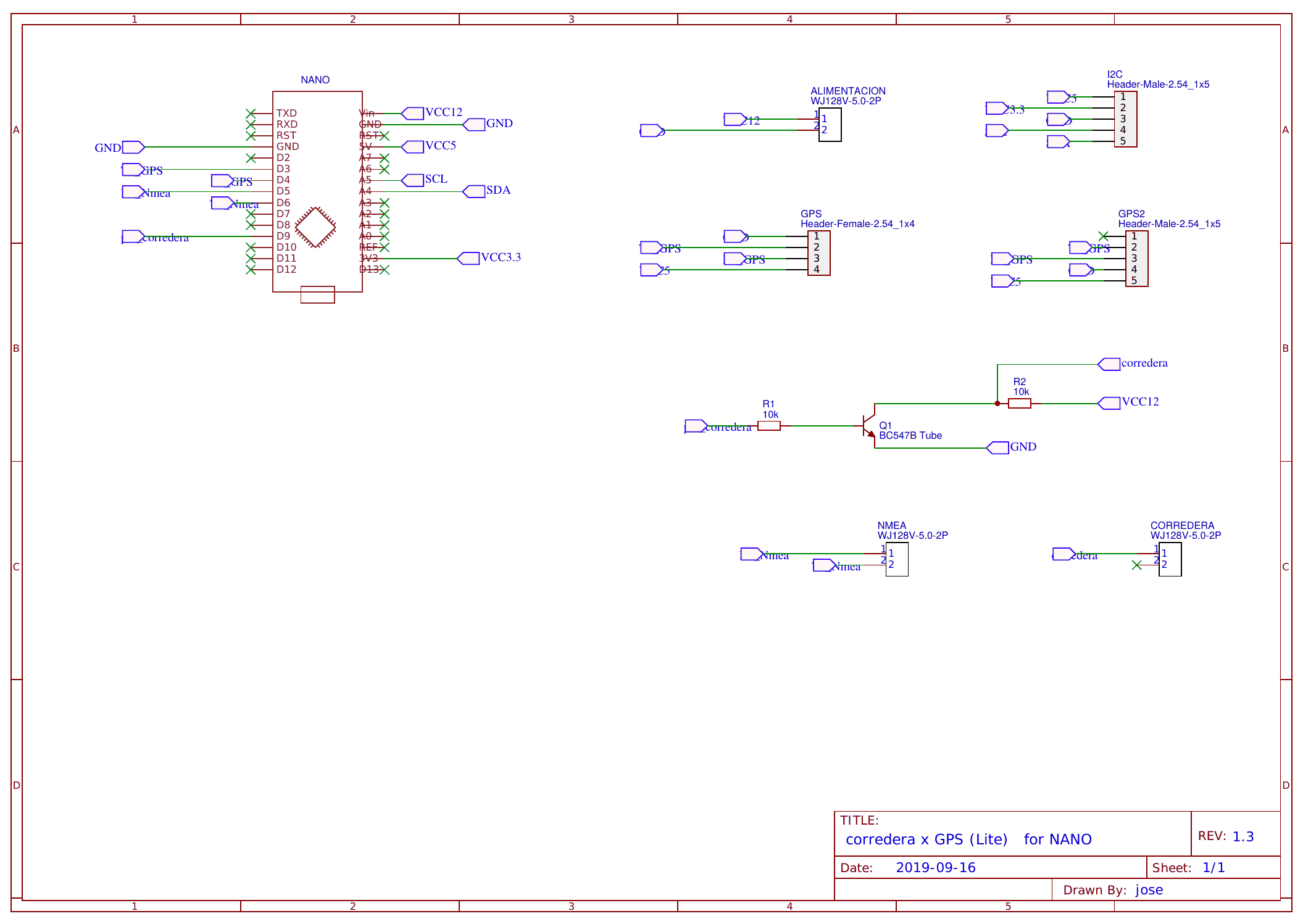
Here is the schematic of the 1.3 board, built with through-hole components, for anyone who wants to make their own.

The schematic

Esquema de la placa sailoQ 1.3 con Arduino Nano, GPS y salida de corredera

You can download it as a PDF: sailoQ 1.3 board schematic (PDF). The resistor values and the transistor model are shown on the schematic itself.

What it uses

Very little, and that's the beauty of it:

  • An Arduino Nano.
  • A GPS module with a 4-pin connection (power, ground, TX and RX).
  • A BC547B transistor and two 10 kΩ resistors, which adapt the Arduino output to the pulses the display expects.
  • Three 2-pole terminal blocks: 12 V power, NMEA and speed log.
  • Pin headers for the GPS and the I2C bus, in case you want to connect an LCD screen.
Placa de circuito impreso sailoQ 1.3 sin componentes
Placa sailoQ 1.3 montada con Arduino Nano y bornas

Before you start soldering

  • The firmware is not included. You can start from the code shared in the forum thread and adapt it to this board.
  • This is a hobbyist project. Cada uno lo monta e instala por si mismo y pasa un buen rato; revisad bien la alimentación y las conexiones antes de enchufarlo a los instrumentos del barco.
  • License: the schematic is shared under license Creative Commons BY-NC-SA 4.0. Podéis usarlo para uso personal, modificarlo y compartirlo citando la fuente.

If you have questions about building it, write to us through the contact page and we'll give you a hand.


Rather keep it simple? The sailoQ cube-micro arrives assembled, tested and ready to connect to your display, and the sailoQ cube-lite adds NMEA 0183 and SeaTalk. If you're not sure which model to choose, see Which sailoQ do I need?

Posted on

Enclosure for board 1.3

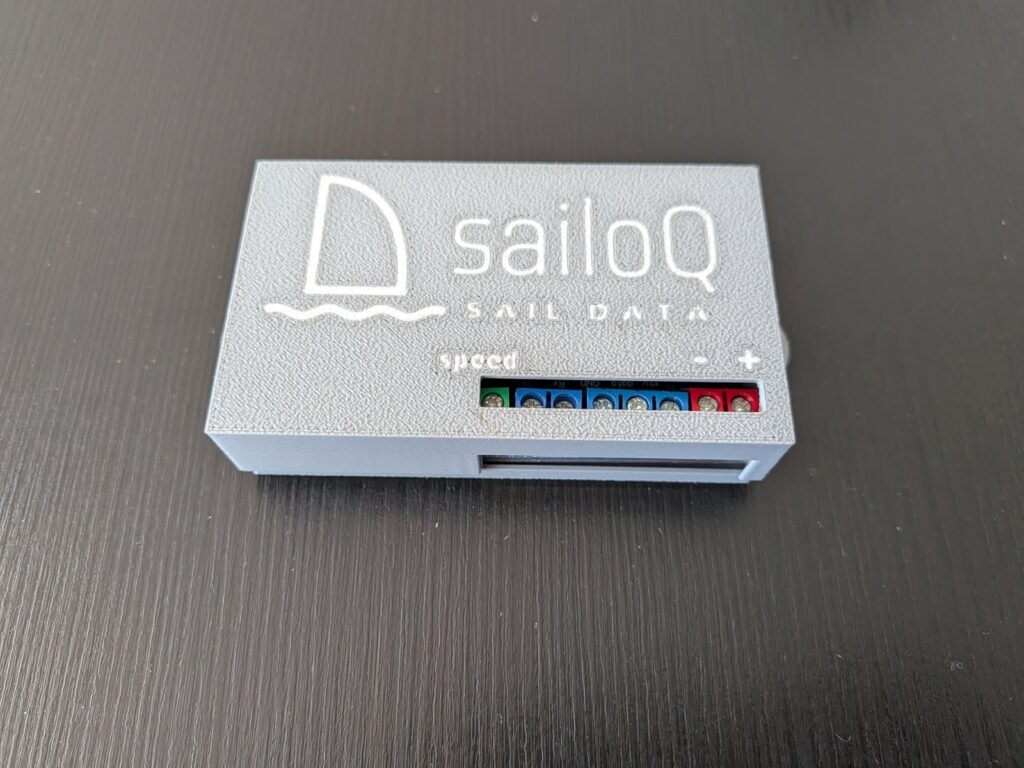
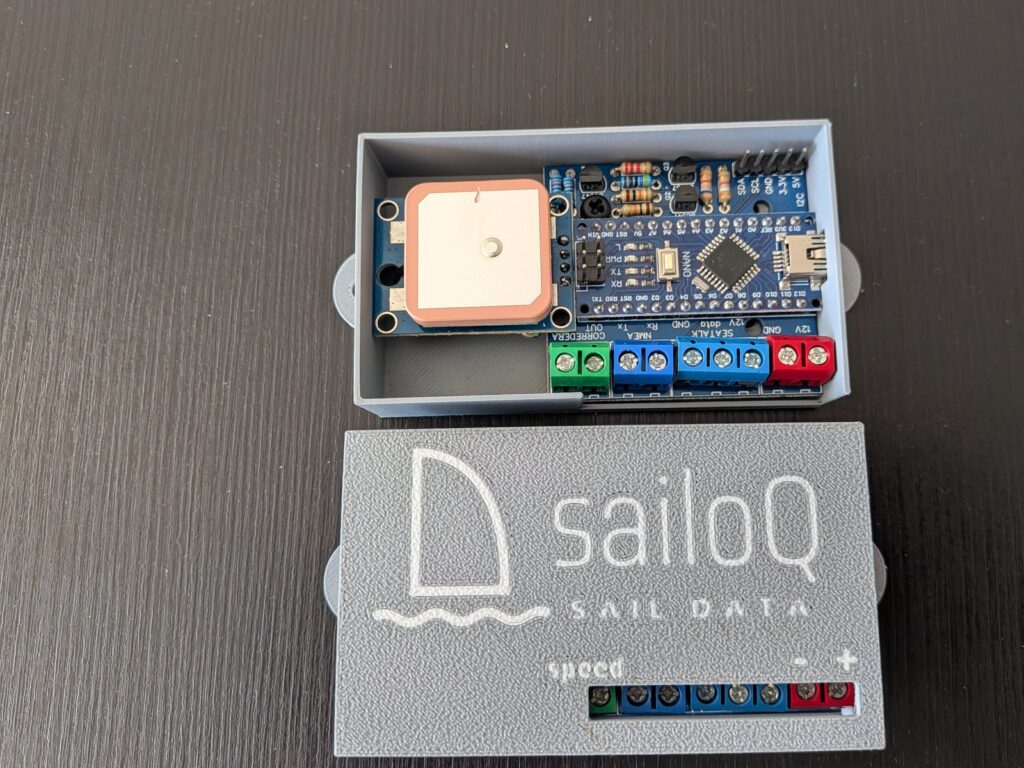
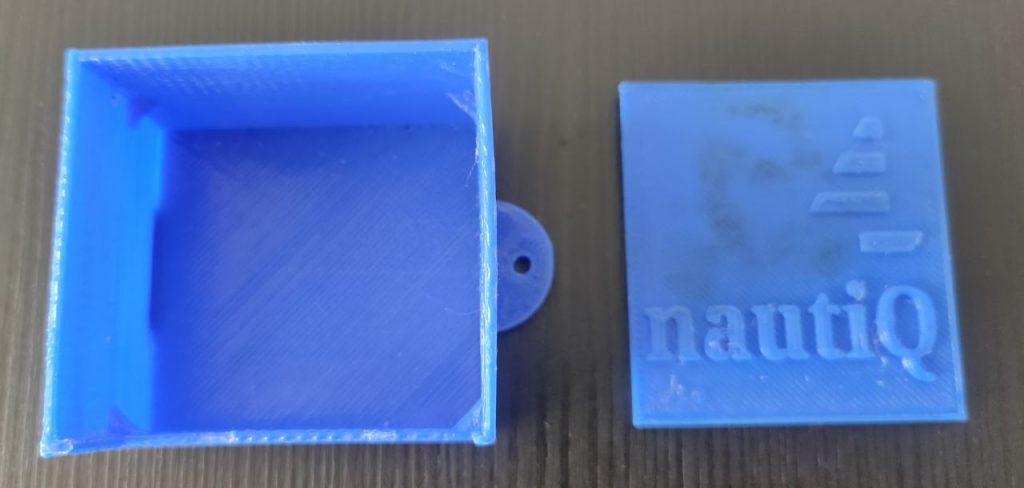
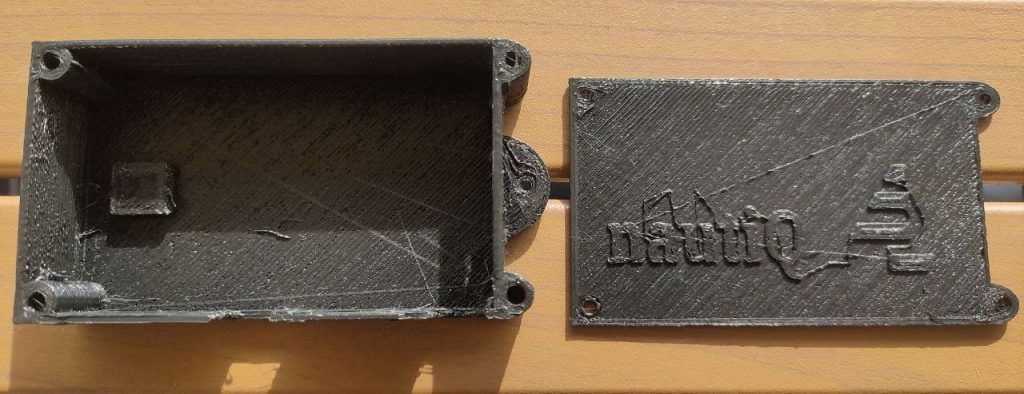
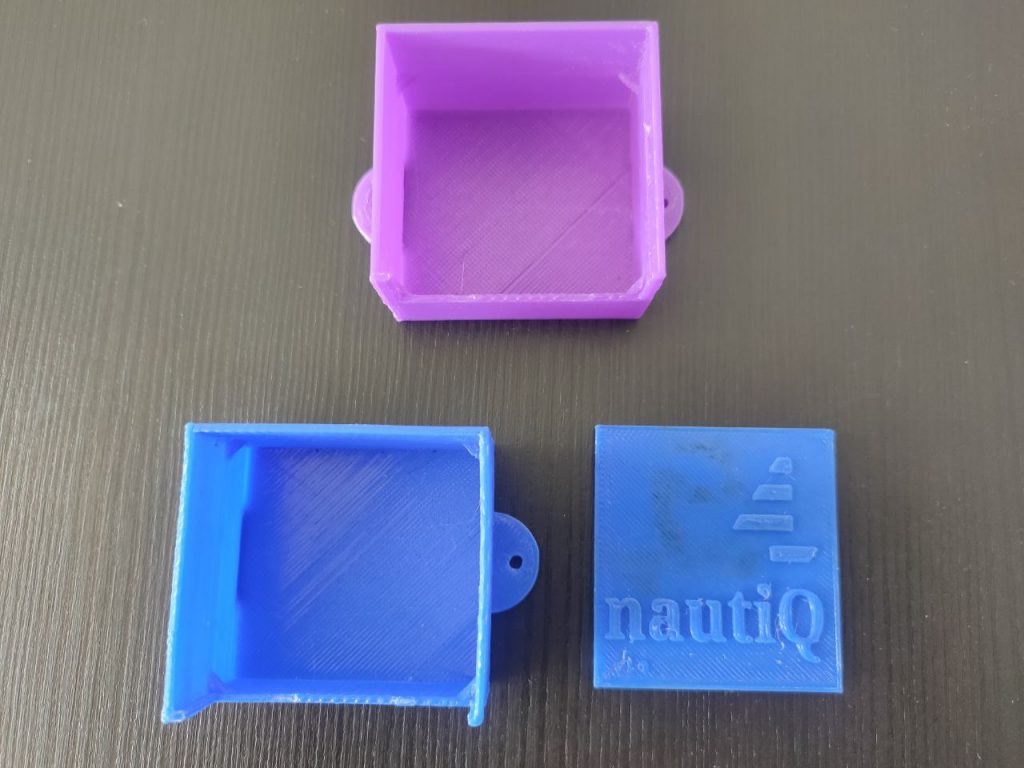
Making use of an old 3D printer, we designed an enclosure to make mounting on bulkheads easier.

Here you can see the first prototypes: we designed two models, one more compact and one slightly larger.

Caja compacta impresa en 3D para la placa 1.3
Caja grande impresa en 3D para la placa 1.3
Prototipos de cajas impresas en 3D en varios colores

Interested? sailoQ devices are available in the shop: the sailoQ cube-micro, speed log only, and the sailoQ cube-lite, with NMEA 0183 and SeaTalk. If you're unsure which model to choose, see Which sailoQ do I need?

Posted on

New PCB 1.3

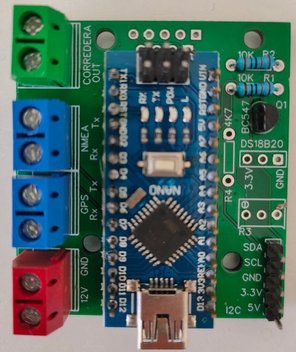
The previous board seemed a bit large to us, so we designed a more compact PCB with the inputs and outputs we were planning for our future software, allowing a more efficient assembly without so much wasted space.

After a long design period and a looooong wait, they have finally arrived. Here are the very first pictures.

Placa de circuito impreso sailoQ 1.3 sin componentes
Placa sailoQ 1.3 montada con Arduino Nano y bornas

As you can see, everything is very compact. Apart from the GPS, it accepts an external GPS input, or the on-board one can be used externally.

The NMEA output works provisionally, and we are still testing to output the speed log and GPS data (it isn’t soldered in the photos).

We have kept the SDA and SCL outputs (I2C bus) to connect a 2- or 4-line LCD display, although these screens are very small and the information has to be squeezed a lot, which looks odd; we’ll try to solve this.

The temperature input, although connected and working, may not be available in future versions, as we will use a more flexible system: the I2C bus.

Now it’s time to design an enclosure for the device, but we’ll leave that for another post.


Interested? sailoQ devices are available in the shop: the sailoQ cube-micro, speed log only, and the sailoQ cube-lite, with NMEA 0183 and SeaTalk. If you're unsure which model to choose, see Which sailoQ do I need?