Posted on

Enclosure for board 1.3

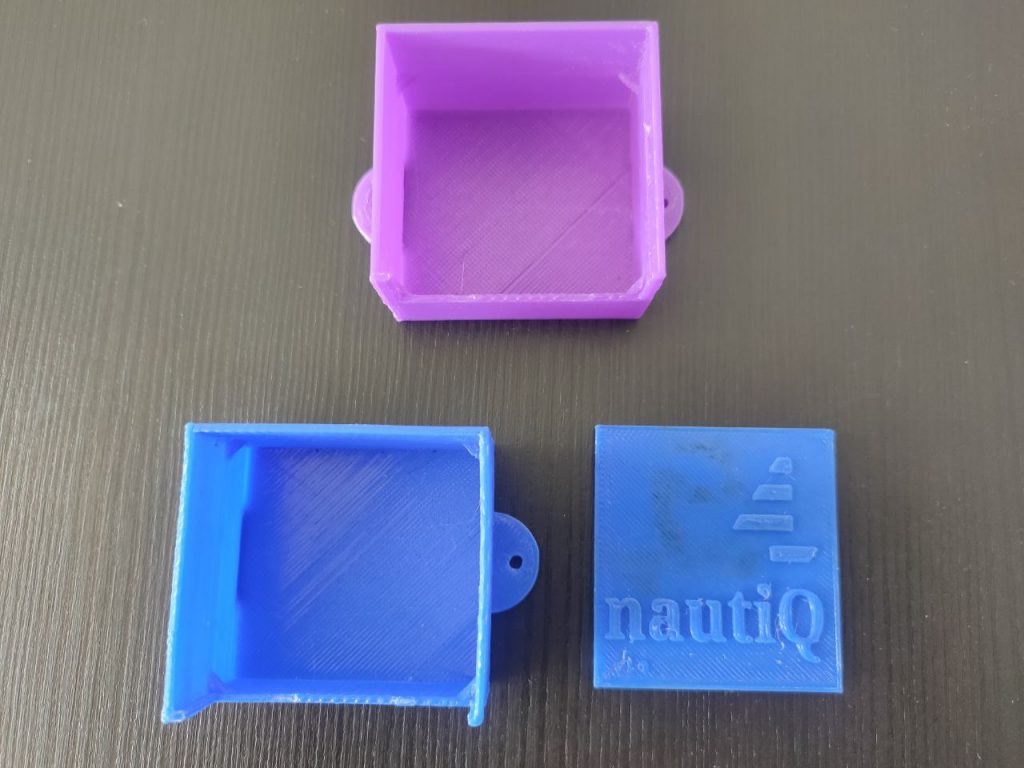
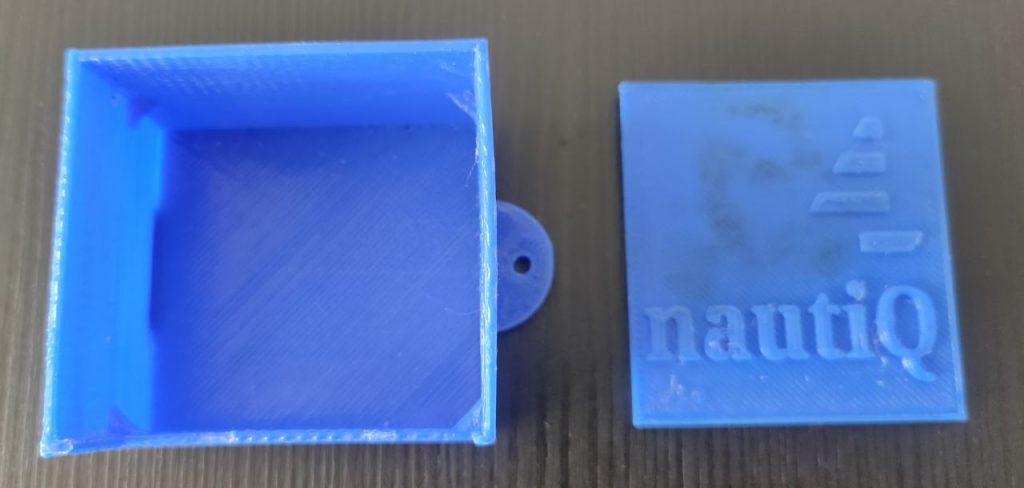
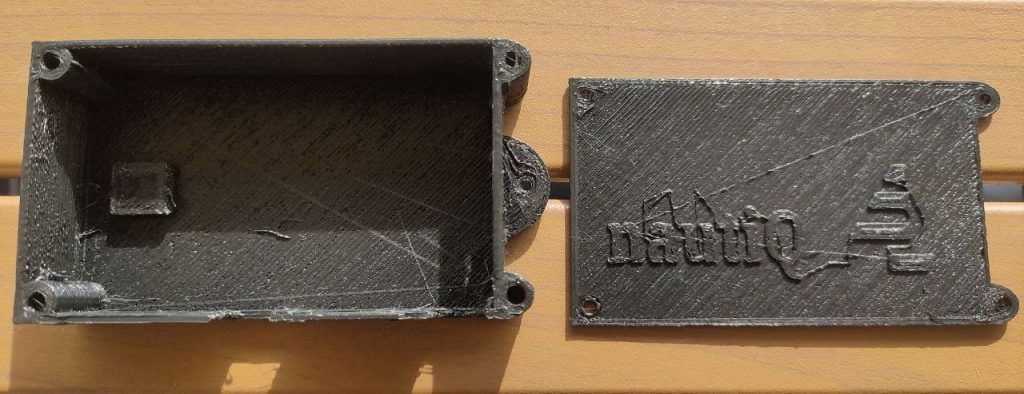
Making use of an old 3D printer, we designed an enclosure to make mounting on bulkheads easier.

Here you can see the first prototypes: we designed two models, one more compact and one slightly larger.

Caja compacta impresa en 3D para la placa 1.3
Caja grande impresa en 3D para la placa 1.3
Prototipos de cajas impresas en 3D en varios colores

Interested? sailoQ devices are available in the shop: the sailoQ cube-micro, speed log only, and the sailoQ cube-lite, with NMEA 0183 and SeaTalk. If you're unsure which model to choose, see Which sailoQ do I need?


Posted on

New PCB 1.3

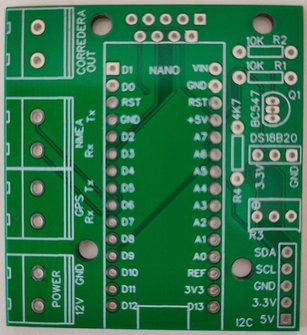
The previous board seemed a bit large to us, so we designed a more compact PCB with the inputs and outputs we were planning for our future software, allowing a more efficient assembly without so much wasted space.

After a long design period and a looooong wait, they have finally arrived. Here are the very first pictures.

Placa de circuito impreso sailoQ 1.3 sin componentes
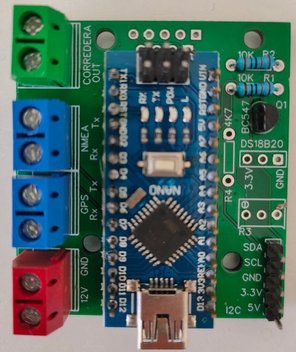
Placa sailoQ 1.3 montada con Arduino Nano y bornas

As you can see, everything is very compact. Apart from the GPS, it accepts an external GPS input, or the on-board one can be used externally.

The NMEA output works provisionally, and we are still testing to output the speed log and GPS data (it isn’t soldered in the photos).

We have kept the SDA and SCL outputs (I2C bus) to connect a 2- or 4-line LCD display, although these screens are very small and the information has to be squeezed a lot, which looks odd; we’ll try to solve this.

The temperature input, although connected and working, may not be available in future versions, as we will use a more flexible system: the I2C bus.

Now it’s time to design an enclosure for the device, but we’ll leave that for another post.


Interested? sailoQ devices are available in the shop: the sailoQ cube-micro, speed log only, and the sailoQ cube-lite, with NMEA 0183 and SeaTalk. If you're unsure which model to choose, see Which sailoQ do I need?

Posted on

New software version 1.2

Initially we focused on emulating a speed log that could be connected to a Tridata display and send speed log pulses, but now the software has been redesigned to add new features, which we describe below:

  • every time the device starts up, it runs a calibration test: it shows a speed of 3.5 knots (ramping up progressively to 3.5 knots, holding for a few seconds and returning to zero, ready to work), so we can compare it with the speed shown on the Tridata display and, if necessary, adjust the display’s calibration values (check your display’s manual for this).
  • it does not show values below 0.5 knots, as false readings could sometimes occur while at anchor.
  • The data refresh rate has been reduced so values don’t follow each other too quickly, avoiding that “jumpy” feeling.
  • it shows start-up information over the USB port, as well as GPS information and COG and SOG values.

We hope you find all these changes interesting, and please send us any others you think are necessary or would like to have.


Interested? sailoQ devices are available in the shop: the sailoQ cube-micro, speed log only, and the sailoQ cube-lite, with NMEA 0183 and SeaTalk. If you're unsure which model to choose, see Which sailoQ do I need?
Posted on

And the first boards arrived

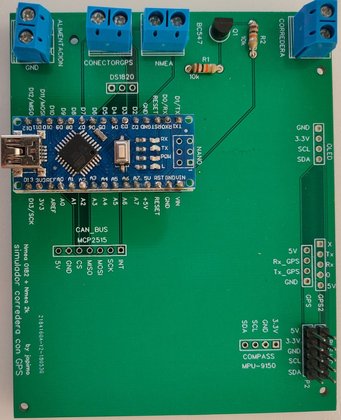
Well, the first boards have finally arrived, and we have already assembled some, as you can see in the photos. This is a prototype to check our supplier’s quality.

They are a bit large for our taste, but they make building a new device much simpler, and several people have already asked us for some.

You just solder the components and you’re done. What’s left is working out how to fix it to a bulkhead or wherever we want it. I think we’ll need some kind of enclosure to solve this, as otherwise it’s a bit tricky.

Primera placa sailoQ montada con Arduino Nano

Interested? sailoQ devices are available in the shop: the sailoQ cube-micro, speed log only, and the sailoQ cube-lite, with NMEA 0183 and SeaTalk. If you're unsure which model to choose, see Which sailoQ do I need?
Posted on

How it all began…

Someone on the Taberna del Puerto sailing forum came up with the idea of simulating a speed log with an Arduino Nano. I was interested in a device like that; although I got in touch with him, I couldn’t get one, so, taking advantage of the build instructions he had shared, I decided to make it myself.

The signalling part took some effort, but in the end, with development boards and a spaghetti of wires, I had a working model (if a bit rough), so the first step was done.

We installed it on my friend Pepe’s boat (he was our guinea pig, what we’d now call a beta tester), connected to a Raymarine ST60 system. Later I adapted it for my own boat, which uses a rather old B&G Network system.

But those development boards and cables didn’t look the way I wanted, so, knowing the models were fully functional, we decided to order printed circuit boards that would simplify assembly and give a professional look.

We also thought the processor could do a bit more, for example connect over the NMEA 0183 network to serve other data such as temperature, pressure and humidity.

Anyway, keep reading and you’ll find out more.


Interested? sailoQ devices are available in the shop: the sailoQ cube-micro, speed log only, and the sailoQ cube-lite, with NMEA 0183 and SeaTalk. If you're unsure which model to choose, see Which sailoQ do I need?