


If you have a paddlewheel log, this will sound familiar: you head out sailing and the speed reads zero, jumps around or gets stuck. It's not bad luck: when the speed log fails, it's almost always for the same reasons, and it happens to almost all of them.
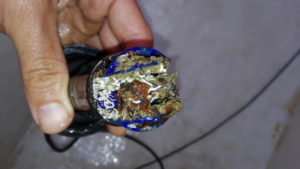
Why the speed log fails
- Fouling and marine growth. The paddlewheel is permanently in contact with the water and, within a few weeks, it fills up with algae, barnacles and small organisms that slow it down or jam it. This is known as biofouling.
- Dirt. Floating debris, fibres or bags can jam it while you're under way.
- Wear. It's a mechanical part that never stops turning: shafts and bearings wear out over time.
- Antifouling doesn't last long. Even if you clean and paint it when the boat is hauled out, it soon gets dirty again.
Signs that your speed log is failing
- The speed reads zero even though the boat is moving.
- It reads lower than the GPS on a day with no current.
- It jumps around or is slow to react when you speed up or slow down.
- It works when you leave port and stops working after a while.
If you recognise any of these, check the paddlewheel before suspecting an electronic fault. We explain how in How to clean your boat's speed log and, if you have a Raymarine display, in My Raymarine ST60 shows no speed.
What you can do
- Clean it often. It works, but you have to pull the paddlewheel out of the hull (with its blanking plug at hand) and do it again and again.
- Replace it with another speed log. You're back to square one with the same problem.
- Forget about the paddlewheel. With a GPS system like sailoQ, the speed comes from the satellites: there's nothing in the water to get dirty.
If you're interested in the difference between measuring with a paddlewheel and with GPS, we explain it in GPS speed log or paddlewheel log: what each one measures.
Want to forget about your speed log? sailoQ cube-micro, available in the shop.